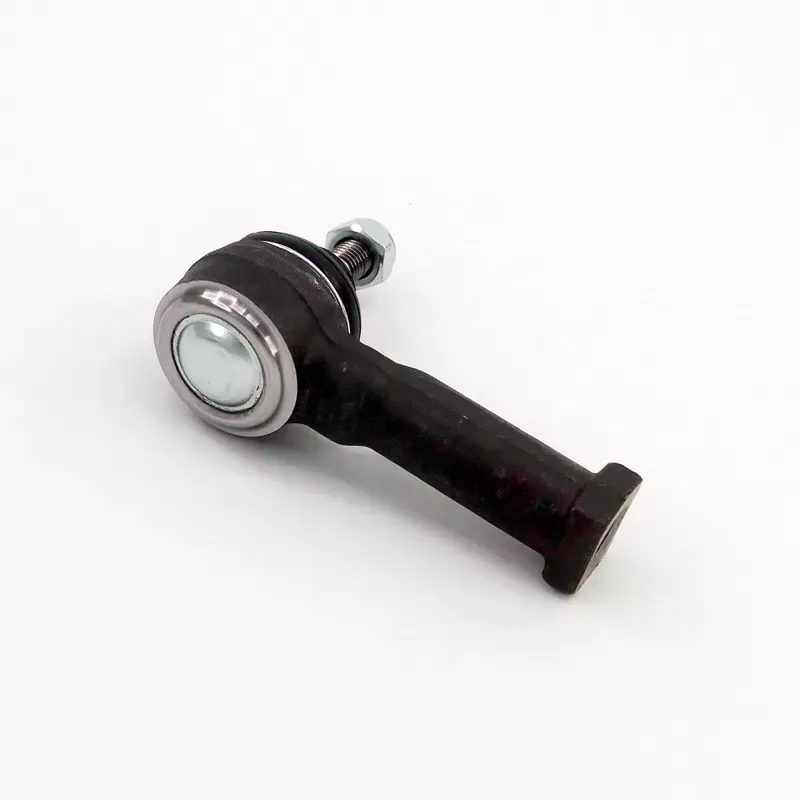
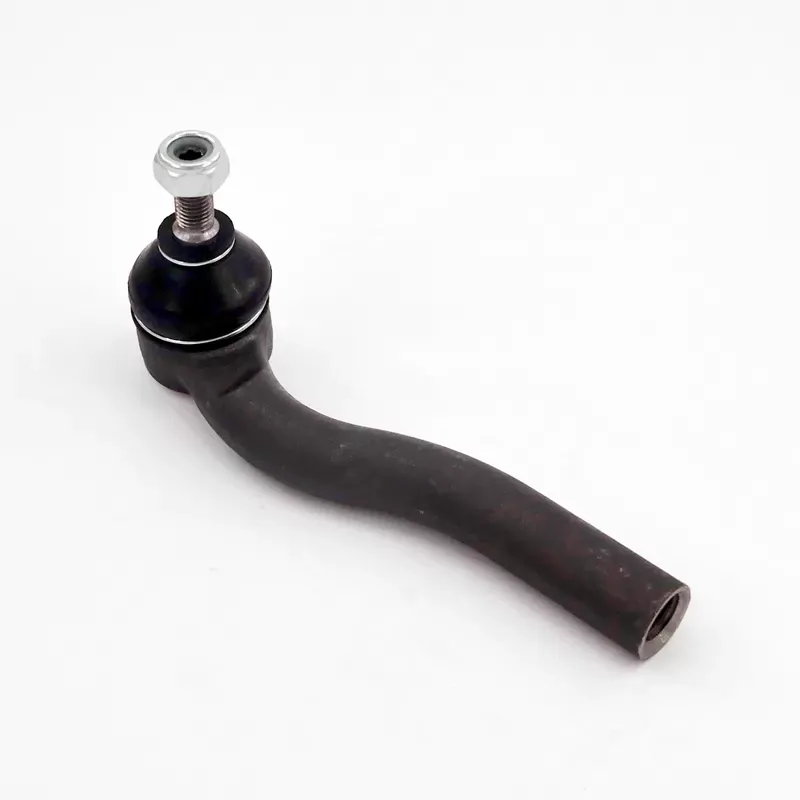
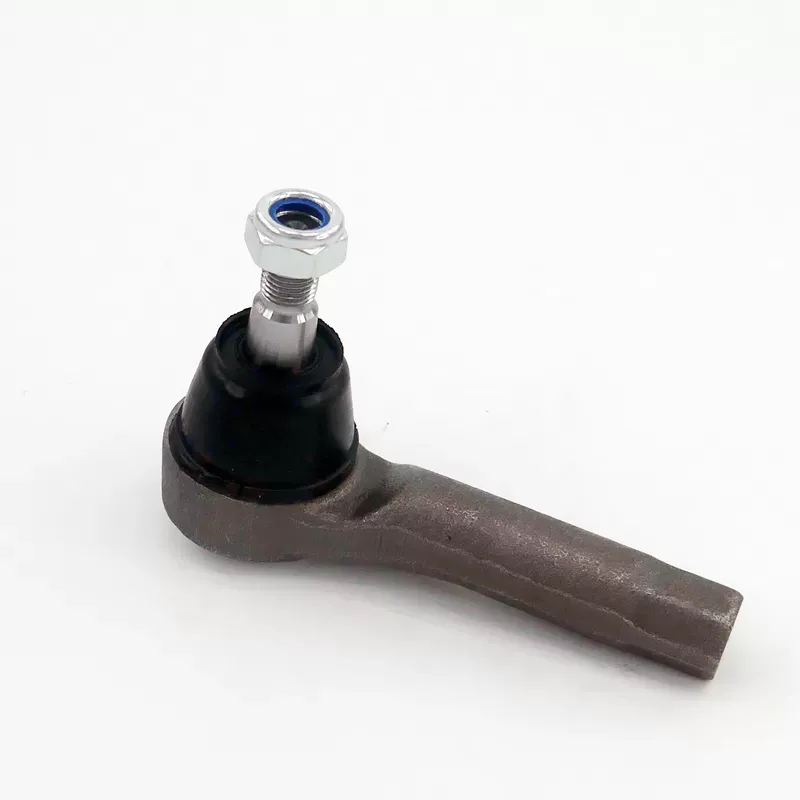
Yes, wheel alignment is necessary after replacing a tie rod end because the tie rod controls toe angle. Even careful thread counting or matching turns may leave the wheel geometry outside specification, causing an off-center steering wheel, pulling, rapid tire wear, unstable handling, and possible steering-angle or ADAS calibration errors.
When I explain tie rod replacement and wheel alignment to car owners, I separate the two jobs clearly. The tie rod end is a steering component that transfers movement from the steering rack to the wheel knuckle, while alignment adjusts the wheel angles to the manufacturer’s specified targets. Replacing the component restores the mechanical connection, but it does not automatically confirm that the wheel is pointing at the correct angle.
A tie rod end is threaded onto the inner tie rod or steering rack assembly. That threaded connection determines the effective length of the steering linkage, and even a small change can alter front-wheel toe. Because toe is measured in degrees, millimeters, or inches across the tire positions, a difference of only a few threads may be enough to affect steering feel and tire wear.
Key Takeaways
- Wheel alignment is necessary after tie rod replacement because the repair can change the front-wheel toe angle.
- Thread counting helps approximate the original setting but cannot replace measured alignment equipment.
- Front-wheel alignment may be sufficient, while many vehicles require a complete four-wheel alignment.
- Worn ball joints, control arms, wheel bearings, or rack components should be repaired before alignment.
- Drivers should request toe readings, steering-wheel centering, thrust-angle data, and ADAS checks when applicable.
- A short, slow trip directly to an alignment shop is safer than normal driving after replacement.
What You Need Before Starting
Before arranging an alignment, I recommend confirming that the tie rod replacement itself is complete and mechanically secure. The tie rod end should be installed with the correct fastener, locking method, cotter pin or prevailing-torque nut, and torque specification for that vehicle. If the joint is loose, the boot is damaged, or the jam nut is not secured, an alignment cannot correct the underlying fault.
You also need the vehicle’s basic service information, including the correct alignment specification, wheel size, tire pressure, and whether the model uses adjustable rear suspension. A repair shop may need the vehicle identification number to identify the correct toe, camber, caster, and thrust-angle targets. For vehicles with lane-keeping, electric power steering, or camera-based driver assistance, the shop should also determine whether a steering-angle reset or ADAS calibration is required.
For a DIY replacement, I would prepare a torque wrench, suitable lifting equipment, axle stands rated for the vehicle weight, a ball-joint separator, a ruler or thread-counting method, and replacement hardware where specified. These tools help complete the mechanical repair, but ordinary home tools cannot produce the same measurement accuracy as a calibrated alignment rack. A tape measure can identify a major toe problem; it cannot reliably certify a production vehicle’s complete alignment.
Step 1 — Inspect the Steering and Suspension Before Alignment
The first step is a steering and suspension inspection before anyone adjusts the alignment. I check the replaced tie rod end, inner tie rod, steering rack mounts, ball joints, control-arm bushings, wheel bearings, strut mounts, and stabilizer links. Any part with measurable play can change the wheel position while the vehicle is moving, which makes alignment readings unstable.
The technician should inspect both the left and right sides, even when only one tie rod end was replaced. A worn component on the opposite side can create similar symptoms and may prevent the steering wheel from remaining centered. The inspection should also include bent wheels, damaged tires, incorrect tire pressure, and evidence of curb or pothole impact.
What to Check
- Confirm that the outer tie rod end is fully seated in the steering knuckle.
- Verify the locking nut or cotter-pin arrangement against the service procedure.
- Check that the jam nut is tight against the tie rod.
- Test the inner tie rod for lateral or axial play.
- Inspect the rubber boot for tears, twisting, or loss of grease.
- Check wheel-bearing and ball-joint movement before mounting the vehicle on the alignment rack.
- Confirm that tire pressures match the vehicle manufacturer’s specification.
Why This Matters
Alignment changes wheel geometry, but it does not repair a loose or incorrectly installed steering component. If a tie rod end moves under load, the alignment reading may change between the initial measurement and the final road test. In that situation, a printed alignment report can show acceptable numbers while the vehicle still has unsafe mechanical movement.
I also treat any steering looseness as a reason to delay alignment. Correcting toe before replacing a worn ball joint, control arm, or inner tie rod can create duplicated labor because the alignment will need to be performed again after the second repair. Paying for one inspection and one final alignment is usually more economical than paying for repeated adjustments.
Common Mistakes to Avoid
- Adjusting alignment before checking for play: Loose components make the final readings unreliable.
- Ignoring the opposite side: A second worn tie rod or ball joint can produce the same pulling or tire-wear symptoms.
- Using incorrect replacement hardware: A mismatched nut, missing cotter pin, or damaged taper can compromise joint retention.
- Skipping torque verification: Tightness should be confirmed with the specified torque method, not by estimating with a hand tool.
Step 2 — Understand How Tie Rod Replacement Changes Toe Angle
The most important technical reason for alignment after replacement is the toe angle adjustment after tie rod replacement. Toe describes whether the front edges of the tires point slightly toward each other or away from each other when viewed from above. The tie rod changes this angle by changing the distance between the steering rack connection and the steering knuckle.
If the new tie rod end is installed one or two threads differently from the original position, the wheel may point inward or outward compared with its previous setting. The change can occur even when the replacement part has the correct catalog number because thread engagement, jam-nut position, component dimensions, and installation technique all affect the final effective length. Matching the visible length of the old part is useful during installation, but it is not a measured alignment procedure.
Toe errors can produce different driving symptoms depending on their direction and size. Excessive toe-in or toe-out can cause the tire tread to scrub against the road instead of rolling in a straight path. That scrubbing may create feathered tread blocks, increased rolling resistance, steering sensitivity, and accelerated wear on the inner or outer shoulder.
Why Thread Counting Is Not Enough
Counting exposed threads or recording the number of turns during removal can help the vehicle remain close enough for transport to a repair shop. It does not prove that the final toe is within the factory tolerance. The old tie rod may already have been misadjusted, the replacement part may have a different seating position, or the original measurement may have been affected by worn components.
I recommend using thread counting as a temporary installation reference rather than a reason to cancel alignment. After the repair, the shop should measure the actual toe values with the steering and suspension loaded as specified. This distinction answers the common question of whether counting turns can eliminate the need for alignment: it cannot.
Step 3 — Decide Between Front-End and Four-Wheel Alignment
The correct service depends on the vehicle’s suspension design and the repair’s effect on the total geometry. A vehicle with a rigid, non-adjustable rear axle may only need a front-end alignment measurement and adjustment. A vehicle with adjustable rear toe or camber generally requires a four-wheel alignment so the technician can measure the rear axle direction and calculate the front settings relative to it.
I use this decision tree when discussing alignment requirements:
| Vehicle condition |
Likely service |
Reason |
| Front-wheel-drive vehicle with non-adjustable rear axle |
Front alignment measurement, sometimes sold as a four-wheel check |
Tie rod replacement directly changes front toe |
| Independent rear suspension with adjustable toe |
Four-wheel alignment |
Rear thrust angle affects steering-wheel centering and vehicle tracking |
| Vehicle with rear tire wear or a prior collision |
Four-wheel alignment |
Rear geometry may be outside specification |
| Vehicle with steering-angle or ADAS systems |
Alignment plus electronic reset or calibration check |
Sensor values may not match the corrected wheel position |
| Vehicle with multiple worn suspension parts |
Repair first, alignment second |
Alignment cannot stabilize worn joints or bushings |
A four-wheel alignment does not necessarily mean that every angle is adjustable. It means the equipment measures all four wheel positions and uses the rear axle direction to establish the vehicle’s geometric centerline. This can prevent a steering wheel from being centered against an incorrect rear thrust angle.
How to Choose the Correct Shop
When I choose an alignment shop, I look for equipment that displays individual toe, total toe, camber, caster, and thrust-angle readings. The shop should be able to provide a before-and-after printout rather than only saying that the vehicle was “checked.” I also ask whether the rack is regularly calibrated and whether the technicians can perform steering-angle resets for the vehicle’s electronic systems.
A shop should not promise a perfect result before inspecting the vehicle. If camber or caster is outside specification and the vehicle has no factory adjustment, the technician should explain whether the cause may be a bent part, worn bushing, subframe shift, or collision damage. This written explanation is more useful than a general alignment package that hides unresolved mechanical problems.
Step 4 — Perform the Alignment and Verify the Repair
Once the steering and suspension pass inspection, the vehicle can be positioned on the alignment rack. The technician should compensate for wheel-runout according to the equipment procedure, secure the steering wheel, and measure the initial values before making adjustments. Tire pressure, ride height, cargo load, and fuel level may also affect the measurement on some vehicles.
The primary adjustment after tie rod replacement is usually front toe. The technician loosens the jam nut, rotates the tie rod or adjustment sleeve, and changes the effective length until the left and right toe readings meet the specified range. The adjustment should be balanced between both sides when possible so the steering rack remains near its center position.
What to Request on the Alignment Report
I recommend asking for these items on the printed report:
- Left-front toe and right-front toe
- Total front toe
- Front camber and caster
- Rear toe and camber when the vehicle supports four-wheel measurement
- Thrust angle or rear axle direction
- Steering-wheel position after adjustment
- Manufacturer target range for each measured angle
- Any steering-angle sensor reset or ADAS calibration recommendation
The report should show both the initial and final measurements. If the final toe is inside the specified range but the steering wheel remains off-center, the technician should investigate steering-rack centering, unequal side-to-side adjustment, or rear thrust angle. A centered steering wheel is not merely cosmetic; it helps confirm that the steering system is positioned symmetrically.
ADAS and Electronic Checks
Modern vehicles may use a steering-angle sensor to support electronic stability control, lane-keeping assistance, and other driver-assistance functions. If the steering wheel position changes after tie rod replacement and alignment, the sensor may require a zero-point reset. Some vehicles also require camera or radar calibration when alignment changes exceed a defined threshold or when suspension repairs affect ride height.
I would ask the shop to check the manufacturer’s procedure rather than assume that electronic calibration is unnecessary. The alignment itself corrects mechanical wheel geometry, but it does not automatically update every electronic control module. If a warning light appears, lane-keeping behavior changes, or the steering-angle value is implausible, the vehicle needs a diagnostic check before normal use.
!
Step 5 — Complete a Controlled Road Test
After alignment, I expect a controlled road test on a reasonably level road with safe traffic conditions. The technician should confirm that the steering wheel remains centered, the vehicle tracks without excessive correction, and there are no knocks or looseness from the repaired side. A road crown can make a vehicle drift slightly, so the test should use more than one road surface when practical.
The road test should not be used to hide abnormal symptoms. A vehicle that still pulls sharply, wanders, produces steering vibration, or makes a clunking noise may have a tire problem, brake drag, wheel-bearing issue, worn suspension part, incorrect installation, or unresolved collision damage. Alignment numbers alone do not prove that the repair is safe.
Signs of Bad Alignment After Tie Rod Replacement
The main signs of bad alignment after tie rod replacement include an off-center steering wheel, vehicle pulling to one side, uneven tire wear, and unstable handling. A steering wheel that sits several degrees away from center while the car travels straight often suggests unequal toe adjustment or an incorrect thrust-angle relationship. Pulling can also result from tire conicity, brake drag, road crown, or unequal tire pressure, so the symptom requires inspection rather than a single assumption.
Uneven wear may appear as feathering across the tread blocks, accelerated wear on one shoulder, or a difference between the left and right front tires. Toe-related wear can develop faster than many owners expect because the tire is continuously forced to scrub sideways as it rolls. If the vehicle has already driven hundreds of miles with an incorrect setting, an alignment will stop further geometric wear but cannot restore rubber that has already been removed.
Unstable handling is more serious when the steering feels loose, the car wanders during braking, or the vehicle reacts sharply to small steering inputs. These symptoms may indicate more than alignment, particularly if the tie rod end, inner joint, or steering rack is not securely installed. I would stop driving and arrange inspection if there is visible looseness, a repeated clunk, a rapidly changing steering position, or difficulty maintaining the lane.
Can You Drive Without an Alignment After Replacing a Tie Rod End?
You can usually drive only a short distance directly to an alignment shop if the tie rod end is correctly installed, all fasteners are secured, the steering feels normal, and the tires are properly inflated. I would keep speed moderate, avoid highways where possible, leave extra stopping distance, and avoid hard cornering or heavy loads. This is a temporary transport decision, not a recommendation for continued daily driving.
I would not drive the vehicle if the steering wheel moves excessively, the car pulls strongly, the tire rubs, the wheel appears visibly turned, or the repaired joint has any play. In those conditions, the risk comes from a possible mechanical installation fault rather than from alignment alone. A tow is the safer option when the steering system’s integrity is uncertain.
What Happens If You Skip Alignment After Tie Rod Replacement?
Skipping alignment can lead to rapid or irregular tire wear, increased rolling resistance, steering-wheel offset, pulling, and reduced directional stability. A severe toe error can make the vehicle feel nervous on straight roads and less predictable during braking or emergency lane changes. The driver may also compensate constantly with the steering wheel, which increases fatigue and masks the original problem.
The total cost can exceed the price of the alignment because tires may wear out before their expected service period. For example, if a vehicle requires a pair of replacement tires several months early, the owner pays for both the tire purchase and the lost usable tread. An alignment is therefore part of the tie rod replacement’s total cost of ownership, not an unrelated optional service.
Tie Rod Replacement and Wheel Alignment Cost
The tie rod replacement and wheel alignment cost depends on the vehicle, labor rate, part design, corrosion, access, alignment type, and whether additional components are worn. In many United States repair markets, a basic alignment commonly falls around $80 to $180, while a replacement outer tie rod end may add approximately $150 to $400 per side for parts and labor. Inner tie rod work, seized threads, rack access, or electronic calibration can raise the total.
These figures are planning ranges rather than guaranteed prices. A repair shop may quote separately for diagnosis, tie rod replacement, alignment, steering-angle reset, and ADAS calibration. I recommend requesting an itemized estimate showing the part number, labor hours, alignment charge, required hardware, and any additional inspection findings.
The least expensive quote is not always the lowest total cost. A supplier or repair shop that cannot document the correct application, torque requirements, warranty terms, or alignment result may create repeat labor and premature tire replacement. When comparing a Tie Rod End Supplier, I examine application coverage, traceable part numbers, packaging controls, inspection records, and the supplier’s process for handling incorrect-fit claims.
Supplier and Part-Quality Considerations
For professional buyers, the replacement part is part of the alignment risk. A tie rod end with incorrect stud dimensions, thread size, taper, or effective length may install poorly or alter the steering geometry even when the packaging appears similar. I would verify the OE reference number, vehicle application, left- or right-hand position, thread direction, supplied hardware, and installation instructions before purchasing.
Zegao Machinery is a chassis-parts manufacturer based in Yuhuan, Zhejiang, China. Its published company information states that it was established in 1995, operates a 5,000-square-meter factory with more than 3,000 square meters of construction area, and reports annual output value of 60 million yuan. Its product range includes tie rod ends, ball joints, control arms, stabilizer links, shock-absorber parts, and other steering and suspension components.
Those figures help a buyer understand the supplier’s stated operating scale, but they do not replace part-specific verification. I would still request dimensional inspection records, material or hardness documentation where applicable, batch identification, packaging specifications, warranty terms, and pre-shipment sampling criteria. For bulk orders, buyers should define acceptable defect limits, sample quantities, inspection timing, and corrective-action procedures in the purchase agreement.
Delivery risk also affects repair planning. If a vehicle is immobilized while waiting for a replacement component, a low unit price may be offset by freight delays, emergency sourcing, additional labor, or customer downtime. A practical purchasing review should compare unit price, shipping cost, lead time, minimum order quantity, warranty exposure, and the cost of a rejected or incorrectly supplied batch.
When Alignment Should Be Delayed
Alignment should be delayed when the vehicle has unresolved mechanical faults that can change the measured geometry. Examples include a bent steering knuckle, damaged control arm, worn ball joint, loose wheel bearing, failed bushing, shifted subframe, damaged wheel, or leaking steering rack. Adjusting toe around those defects can produce a temporary reading that does not remain stable on the road.
I also delay alignment when the replacement tie rod end does not seat correctly or when the thread engagement is questionable. The correct response is to verify the part application and installation, not to compensate by turning the adjustment sleeve farther. If the part is damaged or incorrectly manufactured, alignment equipment cannot make it safe.
The same principle applies after a collision. A vehicle may require structural measurement or suspension-part replacement before alignment, particularly if camber, caster, or rear thrust angle falls outside the available adjustment range. A professional report should identify which angles are adjustable and which require mechanical correction.
A Practical Post-Replacement Checklist
Use this checklist after replacing an outer or inner tie rod end:
- Confirm the correct part number and vehicle position.
- Install the joint and hardware according to the service manual.
- Tighten the stud nut and jam nut to specification.
- Install a new cotter pin or locking device where required.
- Inspect the inner tie rod, rack boot, ball joint, wheel bearing, and control arm.
- Set tire pressures before alignment measurement.
- Arrange alignment as soon as practical.
- Request before-and-after toe readings.
- Confirm the steering wheel is centered during the road test.
- Ask whether steering-angle reset or ADAS calibration applies.
- Recheck for looseness or noise after the first short drive.
- Monitor tire tread for feathering or shoulder wear.
This checklist does not replace the vehicle manufacturer’s repair procedure. It organizes the steps that protect against the most common mistakes: treating thread count as final alignment, overlooking adjacent wear, and accepting an alignment without documented readings.
Conclusion
Why Is Wheel Alignment Necessary After Replacing a Tie Rod End? It is necessary because the tie rod end controls the front-wheel toe angle, and replacing it can change steering geometry even when the new part is installed carefully. An alignment measures and corrects that geometry, confirms steering-wheel centering, and helps prevent tire wear, pulling, unstable handling, and avoidable electronic-system faults.
My recommended sequence is straightforward: verify the part and installation, inspect the complete steering and suspension system, choose front-end or four-wheel measurement based on the vehicle design, complete the alignment, and request a printed report. If worn components are found, repair them before the final alignment rather than adjusting around them. If the vehicle is mechanically secure, drive only the shortest safe distance to the alignment shop and avoid normal use until the geometry has been checked.


 es
 cn