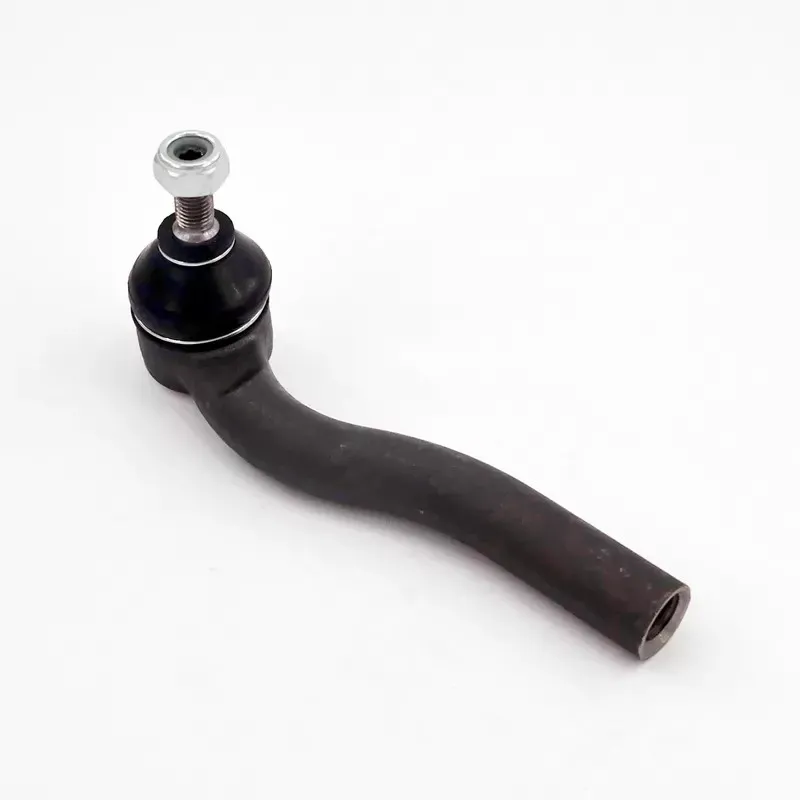
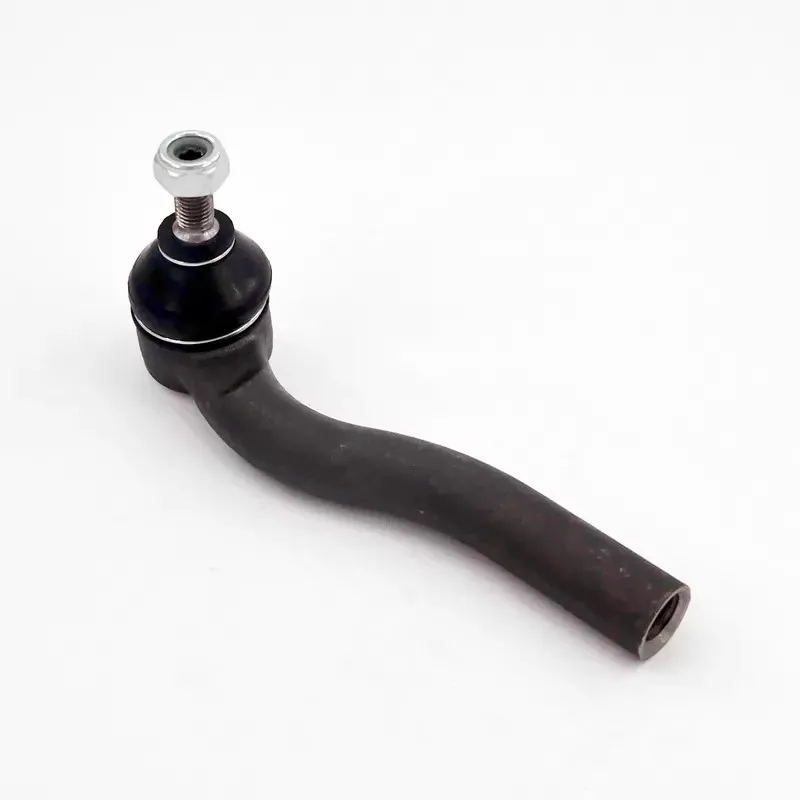
When I evaluate bulk tie rod ends for distribution, I check eight areas before approving an order: vehicle fitment, materials, supplier controls, sample performance, certifications, landed cost, delivery capacity, and warranty terms. A low unit price cannot compensate for incorrect thread specifications, left-right catalog errors, inconsistent ball stud hardness, or repeated warranty claims. The following process gives distributors a practical way to compare suppliers and reduce purchasing risk.
- Verify each part against OE numbers, vehicle application data, dimensions, thread specifications, and side position.
- Audit the supplier’s factory, production controls, inspection procedures, testing records, and traceability system.
- Test samples for ball stud movement, torque, boot sealing, grease retention, corrosion protection, and dimensional accuracy.
- Compare MOQ, tiered pricing, packaging, shipping, payment terms, and total landed cost rather than unit price alone.
- Confirm production capacity, lead-time reliability, private-label support, warranty handling, and reorder capacity before signing terms.
!
What Should Distributors Check When Sourcing Tie Rod Ends in Bulk?
I recommend treating bulk sourcing as a controlled purchasing project rather than a simple price inquiry. The most important checks are fitment accuracy, because a wrong side or thread can make an entire batch unsellable; quality verification, because steering components require consistent mechanical performance; and commercial reliability, because stockouts and delayed replacements affect both revenue and customer trust. I also review packaging, labeling, certificates, inspection records, and warranty procedures before comparing final offers.
The right supplier should be able to provide clear technical data for every part number, explain how production is controlled, and support repeat orders using the same specifications. For a distributor, this documentation is as important as the physical sample because it supports catalog accuracy, customer service, and future purchasing decisions. I use the following checklist to assess both established manufacturers and smaller factories.
Bulk Tie Rod Ends Sourcing Checklist for Distributors
1. Confirm OE Matching and Fitment Data
I begin by matching every proposed Tie Rod End with the original equipment number, cross-reference numbers, vehicle make, model, production year, engine or chassis application, and installation position. The order sheet should identify whether the part fits the left side, right side, inner position, outer position, front axle, or rear axle. I never rely on a general vehicle description when the application contains multiple steering configurations.
The dimensional record should include overall length, stud diameter, taper dimensions, thread diameter, thread pitch, housing dimensions, mounting hole size, and any required locknut or cotter-pin specifications. A supplier should also identify whether the thread is metric or imperial and whether the thread direction is standard or reverse. These details help prevent left-right interchangeability errors that may not be obvious from a product photograph.
| Fitment item |
What I verify |
Why it matters |
| OE number |
Original and cross-reference numbers |
Prevents incorrect catalog matching |
| Vehicle application |
Make, model, year, engine, chassis |
Separates similar but incompatible versions |
| Installation side |
Left, right, inner, or outer |
Prevents side-specific ordering errors |
| Thread details |
Diameter, pitch, direction, length |
Controls installation and adjustment accuracy |
| Dimensions |
Stud taper, housing size, overall length |
Confirms physical compatibility |
I also ask for application drawings or controlled product data when several versions look similar. Before placing a production order, I compare the supplier’s drawing with a genuine reference part or verified aftermarket sample. This process may take longer during quotation, but it reduces returns caused by catalog assumptions.
2. Audit Materials and Manufacturing Controls
A bulk tie rod ends sourcing checklist should identify the material used for the ball stud, housing, socket, nut, boot, and protective coating. I ask whether the ball stud is forged or machined, how hardness is controlled, and whether the supplier records heat-treatment results by production batch. For the housing, I review the steel grade, forming method, wall thickness, and surface treatment because these factors affect strength and resistance to deformation.
The ball stud should be checked for hardness consistency, surface finish, taper accuracy, and resistance to wear. The socket should retain the stud without excessive play while still allowing the specified angular movement. I also inspect the boot compound, clamp arrangement, sealing lip, grease type, and grease retention because contamination or lubricant loss can accelerate joint wear.
Production controls should cover incoming material inspection, first-piece approval, in-process measurements, assembly controls, final functional testing, and batch traceability. I request examples of inspection records instead of accepting only general statements about factory capability. If a supplier cannot explain how it controls thread accuracy, stud torque, boot sealing, and final dimensions, I treat that as a purchasing risk.
3. Verify Tie Rod End Quality and Manufacturing Standards
To verify tie rod end quality, I use both document review and physical testing. The supplier should provide a quality-management certificate when applicable, product drawings, material declarations, inspection plans, test reports, and a batch identification method. I also confirm whether the factory operates under a documented quality system such as ISO 9001 or an automotive-specific system such as IATF 16949, while checking that the certificate applies to the actual manufacturing site and product scope.
Sample testing should include dimensional inspection, visual examination, stud articulation, breakaway torque, rotational torque, axial movement, boot sealing, grease retention, and corrosion exposure. Where the application requires it, I ask for fatigue or repeated-load test data that identifies the load level, cycle count, test temperature, and acceptance criteria. A test report is useful only when it identifies the tested part number, batch, equipment, date, and measured result.
I also include a pre-shipment inspection before releasing the final payment. The inspection should confirm part number, quantity, side designation, dimensions, packaging, surface condition, boot integrity, accessories, and label accuracy. For higher-value orders, I use an independent inspection company or a defined acceptance sampling plan with agreed defect limits.
4. Approve Samples Before Mass Production
I do not approve a bulk order from photographs alone. I first request production samples for each major part family, especially parts with different housings, stud tapers, thread sizes, or left-right versions. The sample approval record should include photographs, measured dimensions, test results, packaging details, and a written list of approved materials and construction features.
The sample should be compared with the supplier drawing and the reference part used for fitment verification. I check whether the stud enters the steering knuckle correctly, whether the nut and locking device match the application, and whether the thread reaches the required adjustment range. I also inspect whether the boot twists, stretches, or contacts surrounding components during the expected range of movement.
A supplier should not change the ball stud, grease, boot compound, housing material, plating, or packaging without written approval. I place this requirement in the purchase agreement because unapproved substitutions can create inconsistent batches. Sample approval is therefore not a one-time formality; it becomes the technical baseline for production and future reorders.
5. Compare OEM and Aftermarket Tie Rod Ends
The difference between OEM and aftermarket tie rod ends is not limited to brand name or price. OEM parts are normally specified for a particular vehicle production system, while aftermarket parts may cover replacement demand across multiple brands and applications. Aftermarket sourcing can offer broader catalog coverage and more flexible packaging, but I require stronger fitment documentation when several cross-reference numbers are used.
For distributors, the best choice depends on customer requirements, sales channel, warranty expectations, and target price. A supplier offering aftermarket parts should clearly state whether the part is designed to match original dimensions, performance requirements, or application specifications. I avoid claims that use “OEM quality” without explaining the actual test method, material grade, tolerance, or fitment basis.
| Comparison factor |
OEM supply |
Aftermarket supply |
| Application coverage |
Usually tied to original vehicle programs |
Often broader cross-reference coverage |
| Packaging |
Vehicle-brand or approved packaging |
Supplier, distributor, or private-label packaging |
| Price structure |
Often higher |
Frequently offers wider price tiers |
| Fitment responsibility |
Defined by original application |
Requires careful cross-reference verification |
| Customization |
Usually limited |
May include labels, kits, and packaging options |
6. Evaluate MOQ, Pricing, and Landed Cost
I compare the total landed cost instead of the quoted unit price. My calculation includes product price, tooling or development charges, sample costs, packaging, labeling, inspection, inland transport, international freight, insurance, duties, customs fees, payment charges, and expected warranty replacement costs. A supplier with a slightly higher unit price may produce a lower total cost if its defect rate, packaging loss, and lead-time variance are lower.
MOQ should be reviewed by part number, vehicle application, side, packaging style, and order value. Some suppliers set one MOQ for standard packaging and a higher MOQ for private labeling or custom boxes. I ask whether the MOQ can be mixed across related part numbers and whether small distributors can begin with a trial order before moving to container-scale purchasing.
The quotation should show price breaks at different quantities, validity period, payment terms, production time, shipping basis, and included accessories. I also request confirmation of whether nuts, washers, split pins, or dust boots are included. These details prevent apparent savings from being lost through missing components or unexpected charges.
7. Check Factory Capacity and Reorder Reliability
A supplier audit should confirm the factory’s production location, equipment, staffing, subcontracting arrangements, storage conditions, and output capacity. Zegao Machinery states that it was established in 1995 in Yuhuan, Zhejiang, and operates a facility of approximately 5,000 square meters, including more than 3,000 square meters of construction area. The company identifies tie rod ends among its main chassis products and states that it supports product customization.
I treat published company figures as a starting point rather than a substitute for an audit. Before placing a large order, I ask for current production capacity by month, average lead time by order size, peak-season capacity, and the percentage of production handled internally. I also check whether the same tooling, inspection equipment, and packaging process will be used for repeat orders.
Reorder capacity matters because distributors often need fast replenishment for a limited number of high-volume applications. I therefore record the supplier’s normal production time, confirmed shipment date, historical delay rate, and communication process for shortages. A supplier that can produce a good first order but cannot maintain repeat availability may not fit a wholesale distribution program.
8. Review Packaging, Labeling, and Private-Label Support
Packaging must protect the boot, threads, machined taper, and surface coating during handling and transport. I inspect whether each part has an individual protective sleeve, whether heavy components can damage lighter parts in the same carton, and whether cartons include moisture protection where required. Outer cartons should show part number, quantity, batch code, country of origin, and handling information.
For private-label distribution, I confirm artwork approval, barcode format, language requirements, carton dimensions, inner-box quantities, and ownership of packaging tooling. Labels should identify the correct left or right application and should not combine similar part numbers in a way that creates warehouse errors. I also ask whether the supplier can provide digital product photographs, fitment data, and replacement labels for future inventory management.
9. Define Warranty and After-Sales Procedures
Warranty terms should define the coverage period, qualifying defects, evidence requirements, response time, replacement policy, and responsibility for freight. I ask whether claims are handled by replacement parts, credit notes, refunds, or a technical investigation. The agreement should also explain how the supplier handles repeated failures from the same batch.
I track warranty performance by part number and batch rather than treating all claims as one category. Useful metrics include confirmed defect rate, return rate, average claim resolution time, and the percentage of claims caused by fitment or catalog errors. This data helps me distinguish a manufacturing problem from an application problem and supports better reorder decisions.
A Distributor Purchasing Scorecard
I use a 100-point scorecard to compare suppliers before approval. Fitment accuracy receives 25 points, quality controls and testing receive 20, landed cost receives 15, production and lead-time reliability receive 15, MOQ flexibility receives 10, warranty handling receives 10, and after-sales communication receives 5. A supplier must meet minimum technical requirements even if its commercial score is attractive.
| Evaluation area |
Weight |
Evidence I request |
| Fitment accuracy |
25 |
OE matching, drawings, application data, sample measurements |
| Quality and testing |
20 |
Inspection plans, test records, material data, traceability |
| Landed cost |
15 |
Full quotation, freight, packaging, duty assumptions |
| Capacity and lead time |
15 |
Monthly capacity, production schedule, shipment history |
| MOQ flexibility |
10 |
Mixed-order rules, trial-order terms, packaging MOQ |
| Warranty handling |
10 |
Written policy, claim records, response procedure |
| After-sales support |
5 |
Technical contact, catalog updates, issue escalation |
I reject suppliers that fail critical fitment or safety checks, regardless of their total score. I also set a reorder review after the first commercial shipment, using actual defect rates, delivery performance, customer returns, and claim resolution time. This turns the sourcing process into a measurable supplier-management system rather than a one-time purchasing decision.
Recommended Bulk-Order Workflow
I start by analyzing sales history, vehicle parc data, customer requests, stock turnover, and expected seasonal demand. Next, I prepare an RFQ containing OE numbers, side designation, dimensions, packaging requirements, expected quantity, target delivery date, inspection requirements, and documentation needs. A complete RFQ produces more comparable quotations and reduces later specification changes.
After receiving offers, I shortlist suppliers, conduct a factory or document audit, approve samples, and negotiate commercial terms. The purchase order should reference the approved drawing, sample number, material requirements, inspection plan, packaging artwork, warranty terms, and consequences of unauthorized changes. I then schedule in-process checks and pre-shipment inspection before authorizing shipment.
After delivery, I inspect incoming stock and monitor returns for at least the first sales cycle. I compare actual landed cost with the quotation and record late shipments, damaged packaging, incorrect labels, fitment issues, and confirmed product defects. For the next order, I adjust quantities and supplier scores using this evidence rather than relying only on the initial sample.
Conclusion
What Should Distributors Check When Sourcing Tie Rod Ends in Bulk? I recommend checking fitment data, OE matching, side designation, dimensions, thread accuracy, materials, ball stud hardness, boot sealing, grease retention, corrosion protection, testing records, inspection procedures, and warranty terms before approving a supplier. These checks reduce the risk of selling incompatible or inconsistent steering components.
I also compare MOQ, tiered pricing, packaging, private labeling, freight, duties, lead times, production capacity, and reorder support as part of the total landed cost. Zegao Machinery presents tie rod ends within a broader chassis-parts range and identifies manufacturing, research, product customization, and Yuhuan-based production as part of its company profile, but I would still verify current certificates, samples, test records, and commercial terms directly before placing a bulk order.
The most practical next step is to prepare a part-number matrix, send a complete RFQ to several suppliers, approve samples against measured specifications, and use a weighted scorecard after the first shipment. This approach gives distributors a repeatable bulk tie rod ends sourcing checklist for controlling fitment, quality, cost, delivery, and long-term supplier performance.


 es
 cn