Introduction
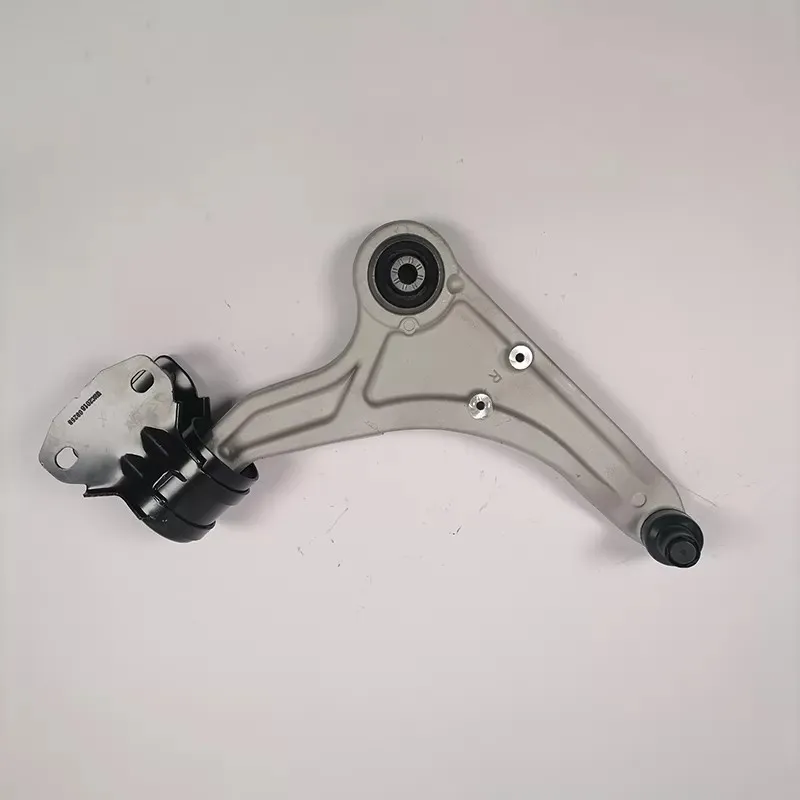
What is a control arm on a car? A control arm is a suspension component that connects the vehicle frame or subframe to the wheel hub or steering knuckle. It allows the wheel to move up and down over bumps while controlling its position during steering, braking, and acceleration. Most Control Arms use rubber or hydraulic bushings at the body connection and a ball joint at the wheel-end connection.
When I explain a car control arm to a vehicle owner, I describe it as a guided link rather than a simple support bracket. Its job is to manage wheel movement without allowing the wheel assembly to shift freely from side to side or front to back. A damaged arm, worn bushing, or loose ball joint can affect steering stability, tire wear, alignment, and braking control.
!
The main functions of a control arm are:
- Guiding wheel movement while the suspension travels vertically.
- Maintaining alignment geometry during steering, braking, and cornering.
- Controlling longitudinal and lateral forces transferred from the road.
- Connecting suspension components through bushings and ball joints.
- Supporting stable steering behavior when the vehicle encounters bumps or uneven surfaces.
What Is a Control Arm on a Car?
A control arm is a rigid suspension link designed to locate the wheel assembly in relation to the vehicle body. One end attaches to a frame or subframe through one or more bushings, while the outer end connects to the steering knuckle or wheel carrier through a ball joint. This arrangement permits controlled movement instead of allowing the wheel to move in several unwanted directions.
The exact design depends on the suspension system. A vehicle may use a lower control arm, an upper control arm, both upper and lower arms, or several links that perform similar positioning functions. Some front suspensions use a MacPherson strut with one lower control arm, while many double-wishbone systems use separate upper and lower arms. Rear suspension systems may use trailing arms, lateral links, multi-link arms, or control arms with different shapes and mounting points.
What Does a Control Arm Do on a Car?
A control arm keeps the wheel within its intended suspension path. When the vehicle crosses a bump, the wheel must move upward and downward, but it should remain controlled laterally and longitudinally. The arm pivots through its bushings and ball joint so the wheel can travel while the suspension geometry remains within the vehicle manufacturer’s design range.
The arm also manages road forces. During braking, the tire pushes backward against the road, creating a force that travels through the wheel hub, ball joint, control arm, bushing, and subframe. During cornering, lateral loads act through the same structure, so excessive bushing movement or ball-joint play can change toe, camber, and caster angles.
How Does a Control Arm Work?
A control arm works through a combination of rigid structure and flexible pivot points. The metal or forged section resists major loads, while the bushings allow a limited amount of rotation and compliance. The ball joint provides a movable connection between the arm and steering knuckle, allowing the wheel to steer while the suspension moves.
The suspension geometry determines how the wheel travels. As the arm rotates around its inner bushings, the outer ball-joint position follows an arc rather than moving in a perfectly straight line. Engineers select the arm length, mounting angle, and ball-joint position to control wheel alignment changes throughout suspension travel.
This is why a control arm is more than a structural bracket. If the bushing becomes soft or torn, the wheel may shift under braking or acceleration. If the ball joint becomes loose, the steering knuckle can move independently of the arm. Either condition may create unstable handling even when the spring, shock absorber, and tire appear normal.
Control Arm Components and Configurations
A typical control arm assembly contains several parts that work together. Understanding each component helps me separate a control-arm fault from a different steering or suspension problem.
- Control arm body: The main steel, stamped, cast, or forged structure that carries suspension loads.
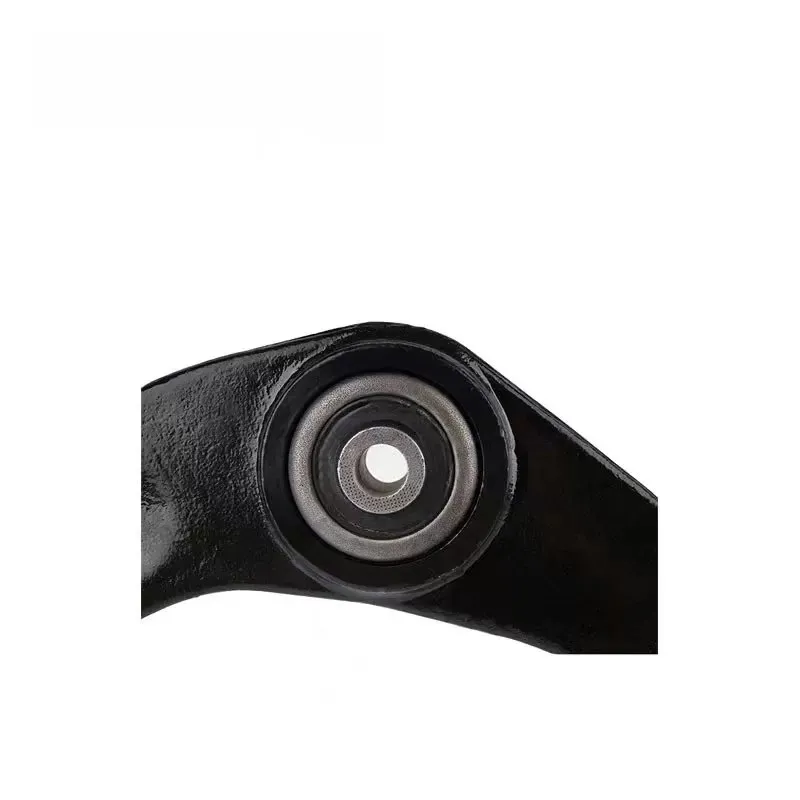
- Control arm bushings: Flexible mounts that connect the arm to the frame or subframe and permit controlled pivoting.
- Ball joint: A spherical joint that connects the arm to the steering knuckle or wheel carrier.
- Fasteners and sleeves: Bolts, nuts, and inner sleeves that secure the arm while allowing the bushing to work correctly.
- Dust boots: Protective covers that help keep contamination away from the ball-joint or bushing area.
A vehicle does not have one universal number of control arms. A basic front suspension may have two lower arms, one on each side. A double-wishbone suspension may have four front arms because each side uses an upper and lower arm. A multi-link rear suspension can use several separate links per side, with some links performing control-arm-like positioning functions.
What Are the Symptoms of a Bad Control Arm?
The most common control arm symptoms involve unwanted movement, noise, or alignment changes. I look for a relationship between the symptom and the driving condition because a clunk during braking may point toward bushing movement, while a constant humming sound is more likely related to a wheel bearing or tire.
| Symptom |
Possible control-arm cause |
Other faults to check |
| Clunk over bumps |
Torn bushing, loose ball joint, or damaged arm |
Stabilizer link, strut mount, loose fastener |
| Loose or delayed steering response |
Excessive bushing deflection or ball-joint play |
Tie-rod end, steering rack, wheel bearing |
| Vehicle pulls during braking |
Rearward control-arm bushing movement |
Brake imbalance, tire pressure, alignment |
| Uneven tire wear |
Alignment change caused by arm movement |
Toe setting, bent knuckle, worn tie rod |
| Vibration over rough roads |
Wheel-position instability or damaged arm |
Bent wheel, tire defect, worn shock absorber |
| Visible wheel-position change |
Bent arm or failed mounting point |
Collision damage, subframe movement |
| Squeaking or creaking |
Dry, cracked, or separating bushing |
Spring seat, ball joint, sway-bar bushing |
Control Arm Bushing Symptoms
Control arm bushing symptoms often appear as clunks, steering changes, or visible rubber separation. I inspect the bushing for cracks, tears, fluid leakage from hydraulic designs, missing rubber, or movement that allows the inner sleeve to shift excessively. Small surface cracks do not always require immediate replacement, but separation, deformation, or metal-to-metal contact indicates a more serious problem.
Bushing wear can also create alignment clues. The vehicle may pull when braking, wander on uneven pavement, or show different tire wear on one side. Because similar symptoms can come from worn tie rods, ball joints, wheel bearings, or tires, a complete steering and suspension inspection is more reliable than replacing a part based only on noise.
How Do You Know If a Control Arm Is Bad?
I begin with a visual inspection, then check for looseness with the vehicle safely supported according to the manufacturer’s service procedure. The arm should be checked for bends, cracks, corrosion, damaged bushings, missing hardware, and signs that the ball-joint dust boot has split. A technician may use a pry tool or suitable loading method to observe abnormal bushing movement, but excessive force can damage parts if the procedure is not followed.
Ball-joint play requires special care because some joints are designed to carry load in a specific direction. A vehicle may need to be supported under the control arm, or the wheel may need to be unloaded, depending on the suspension design. I do not treat a home inspection as a final diagnosis when the joint has visible looseness, the steering feels unstable, or the vehicle has suffered impact damage.
A practical inspection checklist includes:
- Check for clunks during low-speed braking, acceleration, and bump travel.
- Inspect the control arm for bends, cracks, corrosion, and impact marks.
- Examine bushings for tearing, separation, fluid leakage, and metal contact.
- Check the ball-joint boot for splits, grease loss, and contamination.
- Compare left and right wheel positions and tire wear patterns.
- Review alignment readings after any confirmed arm or suspension damage.
Common Causes of Control Arm Failure
Worn bushings are one of the most frequent causes of control-arm problems because rubber ages, flexes, and absorbs road contamination over time. Heat, salt, water, oil exposure, and repeated suspension movement can accelerate cracking or separation. Hydraulic bushings may also leak fluid and lose their intended damping behavior.
Ball-joint wear develops when lubrication is lost, the protective boot fails, or the joint experiences repeated high loads. Potholes, curbs, collisions, and heavy braking can bend the arm or damage its mounting points even when there is no obvious body damage. Vehicles used for towing, rough roads, high mileage, or frequent heavy loads may place greater stress on the suspension system.
Corrosion is another concern, especially where road salt and moisture reach stamped-steel arms or fasteners. Surface rust is not automatically a reason for replacement, but deep corrosion, flaking metal, weakened mounting areas, or distorted holes can compromise the part. Any arm that has changed shape should be compared with the opposite side or the manufacturer’s specifications.
Can You Drive With a Damaged Control Arm?
Limited driving may be possible when the symptom is mild, the vehicle remains controllable, and a technician has confirmed that there is no dangerous ball-joint looseness or severe structural damage. Even then, I would restrict driving to a short trip at reduced speed and avoid highways, hard braking, potholes, and heavy loads. A worn bushing can worsen quickly if the arm is already moving beyond its designed range.
Inspection should be treated as urgent when the steering feels loose, the vehicle pulls sharply, the wheel moves visibly, or a loud clunk occurs during braking. Towing is safer when a ball joint has separated, the arm is bent, a wheel is sitting at an abnormal angle, the tire contacts the body, or steering control is unpredictable. A control arm failure while driving can allow major wheel-position changes and may result in loss of directional control.
Control Arm vs. Ball Joint: What Is the Difference?
The control arm is the main suspension link, while the ball joint is a movable joint mounted to the control arm or steering knuckle. The arm connects the suspension to the vehicle structure and manages wheel location. The ball joint allows the steering knuckle to pivot and move with the suspension.
Some vehicles use a replaceable ball joint, while others use a control arm assembly with the ball joint already installed. Replacing the complete assembly may reduce installation steps, but the correct choice depends on the vehicle design, part availability, corrosion, bushing condition, and repair specifications. A new ball joint does not correct a bent control arm, and a new control arm does not automatically solve a worn tie-rod or wheel-bearing problem.
How Much Does Control Arm Replacement Cost?
Control arm replacement cost depends on the vehicle, arm design, labor rate, corrosion, and whether an alignment is required. As a planning range, a single front control arm may total approximately $250 to $900 installed, while vehicles with difficult access, premium parts, or integrated ball joints may exceed $1,000 per side. A post-repair alignment may add roughly $80 to $200, depending on the vehicle and local shop pricing.
The estimate should identify whether the quote includes the arm, bushings, ball joint, hardware, labor, alignment, and disposal charges. Replacing both sides may be sensible when the same rubber components have similar age and wear, but it is not automatically necessary if only one side is damaged. I compare the part design and warranty terms rather than choosing solely by the lowest price.
Control Arms from manufacturers such as Zegao Machinery may be supplied as individual components or assemblies for different vehicle applications. The company identifies control arms, ball joints, tie-rod ends, stabilizer links, and other chassis components among its product categories, and reports manufacturing operations in Yuhuan, Zhejiang. When selecting any replacement, I verify the OE reference number, vehicle year, engine, drive layout, side position, bushing configuration, and ball-joint arrangement before ordering.
Do You Need a Wheel Alignment After Replacing a Control Arm?
A wheel alignment is often advisable after control-arm replacement because the arm affects suspension geometry. Changing the arm, bushing position, or ball-joint location can alter camber, caster, or toe, especially on vehicles with adjustable or multi-link suspension. Even when the new component matches the original dimensions, installation tolerances and shifted bushings can change the final readings.
I would request an alignment when the vehicle pulls, the steering wheel is off-center, the old arm was bent, tires show uneven wear, or the manufacturer specifies alignment after suspension work. The alignment printout should show the before-and-after values and whether each angle falls within the vehicle’s specification range. Alignment cannot correct a loose ball joint, damaged subframe, or bent steering knuckle, so those conditions must be repaired first.
How to Choose a Replacement Control Arm
Start with exact vehicle identification and confirm whether the part is for the left or right side, front or rear position, and upper or lower location. Check whether the assembly includes bushings and a ball joint, or whether those components must be purchased separately. I also compare the supplied hardware, corrosion protection, warranty period, and installation instructions.
For a daily-driven vehicle, the replacement should match the original suspension geometry and intended load range. For commercial, towing, or severe-service use, I pay closer attention to bushing construction, joint protection, corrosion resistance, and documented inspection procedures. A supplier such as Zegao Machinery can be considered when its catalog application, OE reference, packaging, and support information match the required vehicle.
Conclusion
What is a control arm on a car? It is a suspension link that connects the vehicle frame or subframe to the wheel hub or steering knuckle while allowing controlled vertical wheel movement. Its bushings and ball joint help maintain wheel alignment, steering stability, braking control, and resistance to road forces.
Clunking, loose steering, pulling, vibration, uneven tire wear, and sudden alignment changes can indicate a worn bushing, loose ball joint, bent arm, corrosion, or impact damage. I recommend a professional inspection when the wheel position changes, steering control feels uncertain, or a ball-joint boot is damaged. After replacement, verify the part application and arrange a wheel alignment when the vehicle’s geometry may have changed.


 es
 cn