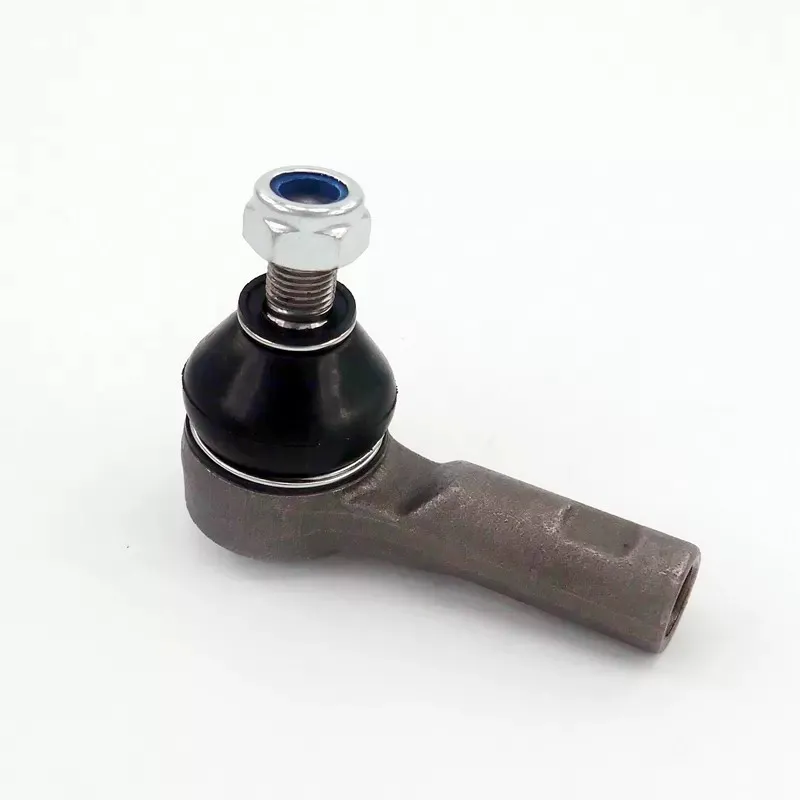
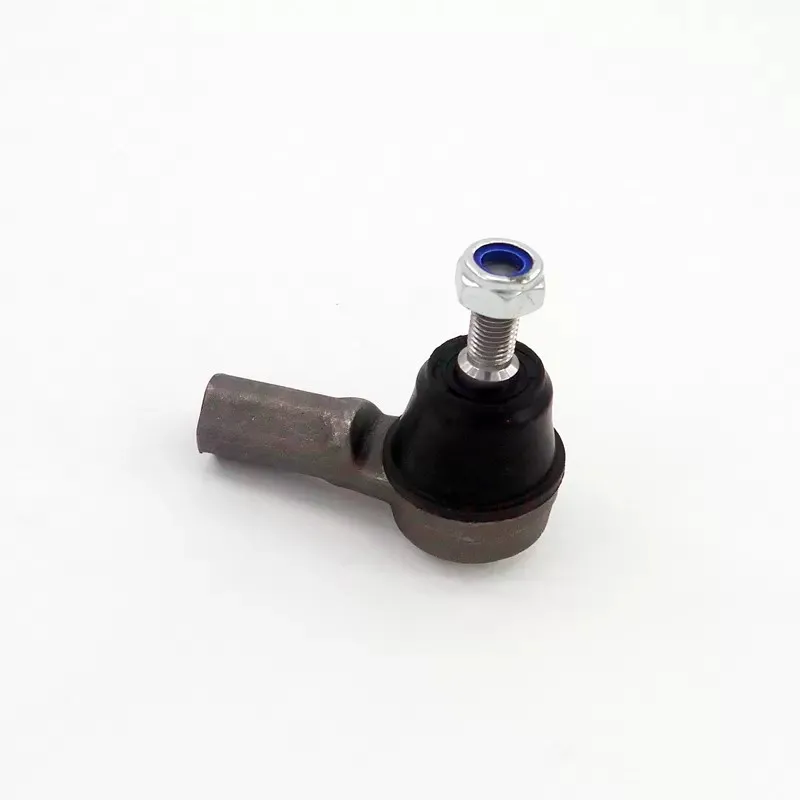
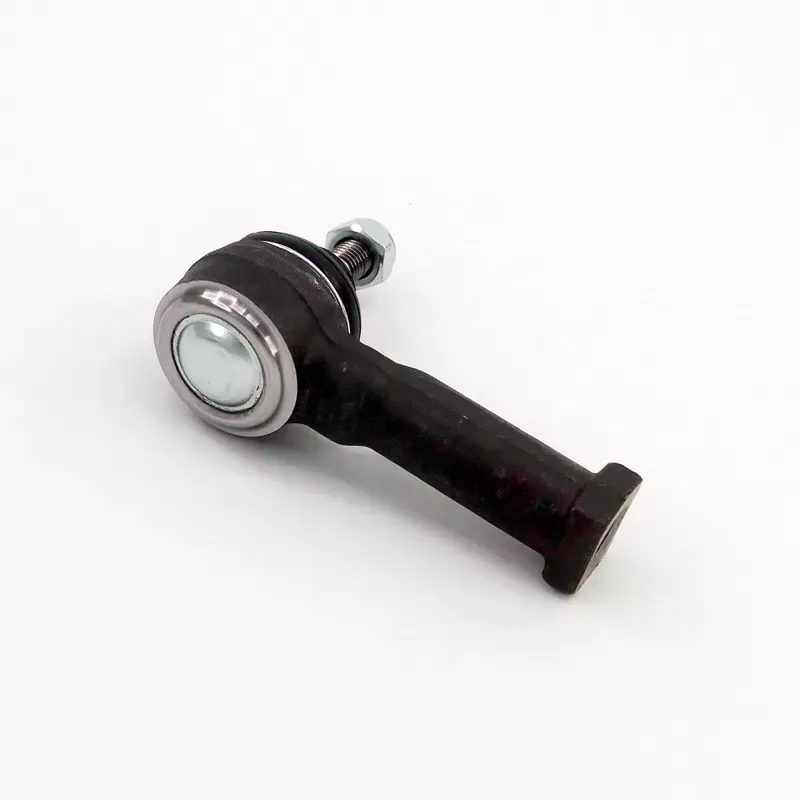
When I evaluate a Chinese supplier, I do not select a Tie Rod End Supplier from price alone. I verify the factory’s legal identity, production ownership, material controls, forging and machining capability, inspection records, export history, and batch consistency before approving an order. I also compare MOQ, lead time, warranty exposure, packaging, and total landed cost rather than relying on a single quotation.
Key Takeaways
- Verify factory ownership, registration, certifications, production equipment, and subcontracting controls before commercial negotiations.
- Compare materials, forging, machining, heat treatment, assembly, dimensional inspection, and functional testing against documented specifications.
- Validate samples through dimensional reports, material certificates, pull-out testing, torque testing, corrosion checks, and packaging inspection.
- Assess OEM, aftermarket, private-label, vehicle-coverage, customization, and packaging capabilities against your sales-market requirements.
- Use a weighted supplier scorecard covering quality risk, landed cost, MOQ, lead time, warranty, communication, and scalability.
What I Check Before Choosing a Chinese Tie Rod End Manufacturer
An aftermarket tie rod end manufacturer produces replacement steering components for vehicles outside the original vehicle brand’s direct supply chain. The manufacturer may produce parts based on OEM reference numbers, technical drawings, reverse-engineered dimensions, customer samples, or its own aftermarket catalog. I distinguish a real manufacturer from a trading company by checking whether it controls the main production steps, maintains traceable inspection records, and can explain how nonconforming parts are isolated.
For importers, the selection process should cover three risk categories: quality compliance, delivery reliability, and total cost of ownership. A supplier with a low unit price may create higher costs through returns, sorting, emergency freight, warranty claims, and lost customer confidence. My evaluation normally focuses on the following criteria:
- Technical capability: Can the factory control forging, machining, heat treatment, assembly, and final inspection?
- Product coverage: Can it support the required vehicle applications, left- and right-hand versions, thread sizes, stud designs, and fitment references?
- Quality evidence: Are material certificates, process records, dimensional reports, and functional test results available?
- Commercial reliability: Are MOQ, lead time, warranty terms, packaging, and payment conditions clearly documented?
- Scalability: Can the supplier support a small initial order and increase monthly volume without changing materials or subcontracting critical processes?
The factory profile also matters. For example, Zegao Machinery identifies itself as Yuhuan Zegao Machinery Company in Zhejiang Province and lists tie rod ends, ball joints, control arms, stabilizer links, and other chassis parts within its product range. Its published company information states that the factory occupies approximately 5,000 square meters, with a construction area exceeding 3,000 square meters, and was established in 1995. These details are useful starting points, but I would still verify them through a factory audit, business documents, current production records, and video or in-person inspection.
!
How to Choose a Reliable Aftermarket Tie Rod End Manufacturer in China
I use five checks before approving a Chinese aftermarket tie rod end manufacturer: verify factory credentials, review technical specifications, audit quality-control systems, validate samples and production batches, and compare commercial reliability. This sequence reduces the risk of choosing a supplier that can quote a part but cannot consistently manufacture it. It also creates documented evidence for purchasing, engineering, and quality teams.
1. Verify Factory Credentials and Ownership
The first step in Chinese tie rod end supplier verification is confirming who legally owns and operates the production facility. I request the company’s registered legal name, business license, registered address, production address, export entity, primary contact, and bank-account name. If the bank beneficiary, quotation issuer, and factory name are unrelated, I ask for a written explanation before sending payment.
I also compare the factory address across the business license, website, quotation, inspection report, and shipping documents. A manufacturer may use a separate export company, but the relationship should be transparent. I record the legal entity responsible for product liability, warranty claims, and replacement shipments.
Business Registration Checklist
- Request a current business license and verify the company’s legal name.
- Confirm whether the registered business scope covers automotive parts or mechanical components.
- Match the business address with the stated factory location.
- Identify the entity receiving payment and the entity issuing commercial invoices.
- Ask whether forging, machining, heat treatment, plating, and assembly are performed internally.
- List every approved subcontractor and identify which process each subcontractor performs.
- Request recent production photos showing identifiable equipment, work-in-process parts, and inspection areas.
- Confirm whether the factory can provide serial, lot, or date-code traceability.
A factory audit should include more than a conference room presentation. I inspect incoming-material storage, forging equipment, CNC or conventional machining areas, heat-treatment records, assembly benches, finished-goods storage, and rejected-part segregation. I also count selected machines and compare them with the supplier’s stated capacity.
Subcontracting is not automatically unacceptable, but uncontrolled subcontracting creates traceability risk. If heat treatment or surface treatment is outsourced, I require supplier approval records, process certificates, sample retention, and incoming inspection after the parts return. A clear process map should identify which company controls each critical characteristic.
2. Review Materials, Forging, Machining, and Heat Treatment
Tie rod end performance depends on several linked manufacturing stages rather than one material label. The housing, ball stud, socket, bearing, boot, grease, nut, and locking components may each require different controls. I request a bill of materials or controlled material specification for every major component.
For the ball stud, I check steel grade, diameter, thread specification, surface condition, heat-treatment method, hardness range, and proof or pull-out requirements. For the housing, I ask whether it is forged, cast, or machined from bar stock, because the process affects grain flow, strength, porosity risk, and dimensional stability. For the bearing and boot, I review polymer type, operating-temperature range, grease compatibility, sealing design, and resistance to cracking.
A quotation that states only “forged steel” is insufficient for technical approval. I ask for a material certificate from the mill or approved source, heat number, chemical composition, mechanical properties, and batch association. For a pilot order, I may send samples to an independent laboratory for material confirmation if the application has a high safety or warranty consequence.
Forging and Machining Questions
- What forging temperature range is used for the ball stud or housing?
- How are forging flash, laps, cracks, and incomplete filling controlled?
- Are forged parts visually inspected before machining?
- Which dimensions are machined, and which are formed or cold-headed?
- What equipment controls the stud taper, ball diameter, thread, and housing bore?
- What dimensional tolerance applies to each critical feature?
- Are gauges calibrated and linked to a calibration schedule?
- Does the factory record tool wear and replace cutting tools at defined intervals?
I prefer a drawing-based inspection plan with measurable limits. For example, a buyer may specify a ±0.05 mm tolerance for a selected machined diameter, but the correct tolerance must come from the engineering drawing, vehicle application, or validated sample. The supplier should not substitute a general tolerance for a critical fitment dimension without written approval.
Heat treatment requires the same level of documentation. I request furnace identification, temperature records, time-at-temperature data, quenching medium, tempering conditions, hardness results, and lot traceability. If the supplier cannot connect hardness readings to a production batch, it is difficult to determine whether the tested sample represents the shipped goods.
3. Evaluate Aftermarket Tie Rod End Quality Control and Testing
A reliable aftermarket tie rod end manufacturer should operate controls at incoming inspection, process inspection, assembly inspection, and final inspection. I ask for the inspection plan, control plan, work instructions, gauge list, calibration records, nonconformance procedure, and corrective-action examples. These records show whether quality control is part of production or added only when a customer requests documents.
Incoming inspection should cover steel, forgings, nuts, boots, grease, and packaging materials. Process inspection should monitor dimensions created during turning, milling, drilling, threading, grinding, and pressing. Final inspection should confirm fitment dimensions, thread engagement, boot seating, locking features, appearance, and functional movement.
Sample-Validation and Batch-Consistency Process
I do not approve a production order solely from photographs or one sample. I use a three-stage validation process:
-
Sample approval
Measure critical dimensions, verify material documentation, inspect surface finish, assess boot sealing, and compare the part against the drawing or approved reference sample.
-
Pre-shipment batch inspection
Select samples from different cartons and production times rather than taking every sample from one box. Compare dimensions, torque, pull-out results, marking, plating, grease quantity, and packaging condition with the approved sample.
-
Retained-sample control
Require the factory and buyer to retain identified samples from the approved batch. Mark the samples with part number, lot number, production date, and inspection status for future comparison.
Functional testing should be defined by the application. I usually request or specify pull-out testing, rotational torque testing, swing or articulation checks, and corrosion testing where appropriate. The acceptance values must be agreed in writing before production because tie rod end designs vary by vehicle, stud diameter, joint construction, and intended load.
For corrosion evaluation, I may request a salt-spray test using a specified exposure period, such as 96 or 240 hours, but the required result depends on the plating system and customer specification. The test report should identify the sample, coating process, exposure duration, test laboratory or equipment, and failure criteria. A statement such as “rust resistant” without an exposure period or acceptance definition cannot support a purchasing decision.
Torque testing is also easy to misunderstand. A joint that is too loose may create movement or noise, while one that is too tight may restrict steering articulation. I require minimum and maximum torque limits, test speed, test temperature, sample conditioning, and the direction of rotation to be recorded.
4. Confirm OEM, ODM, and Private Label Manufacturing Capabilities
The product scope should match your business model. Some buyers need standard aftermarket references for wholesalers, while others need private-label tie rod end manufacturer China services, custom packaging, barcode labels, special coatings, or vehicle-specific product development. I separate these requirements before requesting quotations because customization can affect tooling, MOQ, approval time, and unit cost.
Zegao Machinery presents tie rod end products alongside other chassis components and states that it can customize products according to customer requirements. Its product pages include applications identified by OEM reference numbers, including examples for Fiat and General Motors Opel tie rod ends. Those listings indicate catalog and reference-number coverage, but I would still request a current application catalog, cross-reference data, drawing control, and sample confirmation for each target vehicle.
Capability Areas I Compare
| Requirement |
Evidence I Request |
| OEM replacement fitment |
Cross-reference list, drawing, sample, and fitment verification |
| Aftermarket catalog coverage |
Current part-number database and annual update process |
| Private labeling |
Packaging samples, labels, barcodes, carton marks, and artwork approval |
| ODM development |
Engineering contact, drawing review, prototype schedule, and tooling terms |
| Custom packaging |
Inner-box dimensions, carton strength specification, print proof, and packing photos |
| Vehicle coverage |
Application list by make, model, year, engine, axle position, and steering side |
| Product marking |
Laser marking, molded marking, batch code, logo, or traceable identifier |
I also check whether the supplier can maintain the same specification across different packaging formats. A private-label project may involve different carton quantities, label languages, warning statements, and barcode systems. These changes should not alter the part itself unless the buyer approves a revised specification.
5. Compare Factory Capacity, Certifications, and Export Experience
Capacity should be measured in relation to your actual demand, not presented as a single monthly number. I ask for monthly output by product family, current utilization, peak-season capacity, machine availability, staffing on each shift, and the lead time required for new tooling. If a factory claims capacity of 100,000 pieces per month but cannot show production planning or equipment allocation, I treat the figure as unverified.
Certifications should be checked for scope, issuing body, certificate number, validity period, site address, and covered processes. ISO 9001 can indicate a documented quality-management system, but it does not automatically prove that every tie rod end meets your technical specification. If an automotive program requires IATF 16949 or another customer-specific standard, I confirm whether the certificate covers the actual production site and relevant product scope.
Export experience reduces documentation and logistics risk, but it must be specific. I ask for export destinations, common shipping terms, carton and pallet standards, customs-document experience, and the ability to provide commercial invoices, packing lists, certificates of origin, and inspection documents. I do not need confidential customer names, but I do need enough evidence to assess whether the supplier has handled similar aftermarket distribution channels.
Zegao Machinery’s published profile identifies Yuhuan, Zhejiang, as its operating location and lists fixed assets of approximately RMB 30 million, working capital of approximately RMB 20 million, and annual output value of approximately RMB 60 million. These figures provide commercial context, but they are not substitutes for audited financial documents, current capacity data, or production records.
How Do I Verify an Aftermarket Tie Rod End Manufacturer in China?
I verify the manufacturer through document review, production observation, sample testing, and reference checks. The minimum evidence package should include a business license, factory address, process flow, equipment list, quality certificates, inspection plan, sample reports, and export documents. I then compare the information across documents to identify inconsistent addresses, unexplained trading entities, or production steps that are not controlled by the quoted supplier.
During a factory audit, I inspect whether critical operations are performed in-house or outsourced. I verify that inspection instruments are calibrated, rejected parts are physically segregated, production lots are identifiable, and operators follow written work instructions. I also select random work-in-process parts and compare them with the stated drawing or process standard.
I ask the supplier to demonstrate how a nonconforming tie rod end is handled. A controlled process should show identification, quarantine, root-cause analysis, corrective action, reinspection, and disposition approval. If defective parts are simply reworked without records, the same issue may reappear in the next shipment.
Compare MOQ, Lead Time, Warranty, and After-Sales Support
MOQ affects cash flow, inventory age, and the cost of testing new applications. For a small business, I prefer a supplier that can offer a pilot order of 50–200 pieces per part number, even if the standard MOQ is higher. The supplier may charge a tooling or packaging setup fee, but that cost can be lower than holding slow-moving inventory across dozens of vehicle applications.
Lead time should be separated into sample lead time, tooling lead time, production lead time, packaging lead time, and shipping time. A quotation stating “15 days” is incomplete unless it explains whether the period begins after deposit, drawing approval, packaging approval, or raw-material arrival. I request a written production schedule with milestones and a late-delivery escalation process.
Warranty terms should define the coverage period, evidence required, inspection method, replacement responsibility, and freight allocation. I also calculate potential warranty exposure using expected claim rates. For example, on an order of 10,000 pieces, a 1% field-claim rate represents 100 affected units before labor, reverse logistics, customer credits, or reputational costs are included.
Use a Supplier Scorecard Instead of Choosing the Lowest Quote
I use a weighted supplier scorecard to prevent price from dominating the decision. The weighting changes by application, but a practical starting model assigns 30% to quality capability, 20% to sample and batch consistency, 15% to delivery reliability, 15% to total landed cost, 10% to communication and documentation, and 10% to scalability and customization.
| Evaluation Factor |
Weight |
Evidence |
| Quality-system maturity |
15% |
Control plan, inspection records, calibration, corrective actions |
| Material and process capability |
15% |
Material certificates, forging, machining, heat-treatment records |
| Sample and batch consistency |
20% |
Dimensional reports, torque, pull-out, corrosion, retained samples |
| Total landed cost |
15% |
Unit price, tooling, packaging, freight, duty, inspection, warranty |
| Lead-time reliability |
15% |
Production schedule, historical delivery data, capacity plan |
| MOQ flexibility |
5% |
Pilot-order terms and mixed-part-number policy |
| Communication quality |
5% |
Response time, document accuracy, engineering support |
| Scalability and private label |
10% |
Equipment, workforce, packaging, product-development capability |
I score each category from 1 to 5 and multiply by the weighting. A supplier scoring 4.2 out of 5 with a slightly higher unit price may produce a lower total cost than a supplier scoring 3.1 with repeated dimensional deviations. I also set rejection thresholds: for example, no supplier proceeds if factory ownership is unclear, critical test data cannot be provided, or the sample fails an agreed fitment requirement.
Calculate Total Landed Cost and Return on Investment
The correct sourcing comparison includes more than the factory quotation. I calculate total landed cost as:
Unit price + tooling allocation + packaging + inspection + inland transport + ocean or air freight + insurance + duties and taxes + financing cost + expected warranty cost.
As an example, suppose a tie rod end has a factory price of $4.20, packaging and documentation add $0.25, inspection adds $0.12, freight and inland logistics add $0.48, and duties or other import costs add $0.55. The estimated landed cost becomes $5.60 before local warehousing and distribution.
Now compare two suppliers. Supplier A quotes $4.00 but has a 2.5% expected defect and warranty rate, while Supplier B quotes $4.35 with a 0.8% expected rate. If each warranty event creates $18 in combined replacement, handling, and customer-service cost, Supplier A carries an expected warranty burden of $0.45 per unit, while Supplier B carries $0.144 per unit. The $0.35 price difference narrows to approximately $0.044 after estimated warranty exposure, before considering delivery disruption.
These figures are illustrative and should be replaced with your own claim history, inspection cost, freight rates, and return data. The purpose is to compare supplier economics using measurable assumptions. For importers handling 20,000 units annually, a $0.20 reduction in avoidable cost represents $4,000 per year, while a $0.50 increase represents $10,000.
Request a Controlled RFQ Package
I send the same technical and commercial request to every shortlisted supplier. This prevents suppliers from quoting different specifications and makes the comparison meaningful. The RFQ should include part numbers, OEM references, drawings or samples, material requirements, packaging, inspection expectations, estimated annual demand, target order quantity, destination port, and requested Incoterm.
My RFQ checklist includes:
- Part number and vehicle application
- Left- or right-hand position
- OEM reference number
- Stud taper and thread dimensions
- Housing and ball-stud material requirements
- Heat-treatment and hardness requirements
- Boot material, grease, clamp, and sealing requirements
- Surface-treatment requirements
- Marking and branding
- Inner-box and master-carton specifications
- Requested MOQ and pilot quantity
- Sample lead time and production lead time
- Warranty period and claim procedure
- Pre-shipment inspection requirements
- Payment terms and shipping terms
- Required certificates and test reports
I ask each supplier to identify assumptions, exclusions, tooling charges, and price-validity periods. If a quotation omits testing, packaging, or inspection, I add those costs separately rather than treating the quote as comparable. I also request a price ladder for 100, 500, 1,000, 5,000, and 10,000 pieces when possible.
Make the Final Decision Through a Pilot Order
After technical review, I place a controlled pilot order before committing to a large annual contract. The pilot should contain enough pieces to evaluate different production batches, cartons, markings, and packaging conditions. For a multi-application program, I may test 3–10 part numbers rather than approving the entire catalog from one reference.
Before shipment, I arrange an inspection that checks dimensions, thread quality, boot installation, grease presence, nut and locking components, carton labels, quantity, and random functional samples. I compare the inspection results with the approved sample and purchase specification. If results differ, I require documented corrective action and a decision on whether the batch can ship.
I retain samples from the approved lot and record the inspection date, lot number, supplier, part number, and test results. These retained samples become the reference for future claims and periodic supplier reviews. For established suppliers, I repeat performance reviews at least every six or twelve months, depending on product risk and claim history.
Final Recommendation
How to Choose a Reliable Aftermarket Tie Rod End Manufacturer in China depends on evidence across quality, delivery, and total cost rather than on catalog size or the lowest quotation. I recommend verifying the legal entity and factory ownership first, then reviewing materials, forging, machining, heat treatment, assembly, inspection, certifications, and export records. After that, I validate samples and production batches with dimensional reports, material certificates, pull-out testing, torque testing, corrosion checks, packaging inspection, and retained samples.
Zegao Machinery may be a relevant candidate for buyers seeking tie rod ends and related chassis parts because its published profile identifies a Zhejiang manufacturing operation established in 1995, a stated 5,000-square-meter factory, and product coverage including tie rod ends, ball joints, control arms, and stabilizer links. I would still require current certificates, factory-audit evidence, application data, sample results, MOQ, lead-time commitments, and warranty terms before approval.
My next step would be to send a controlled RFQ, request samples for priority part numbers, schedule a factory audit, and calculate total landed cost using actual freight, duty, inspection, and warranty assumptions. A supplier that passes those checks can then be evaluated for a pilot order, private labeling, and a longer-term supply agreement.


 es
 cn