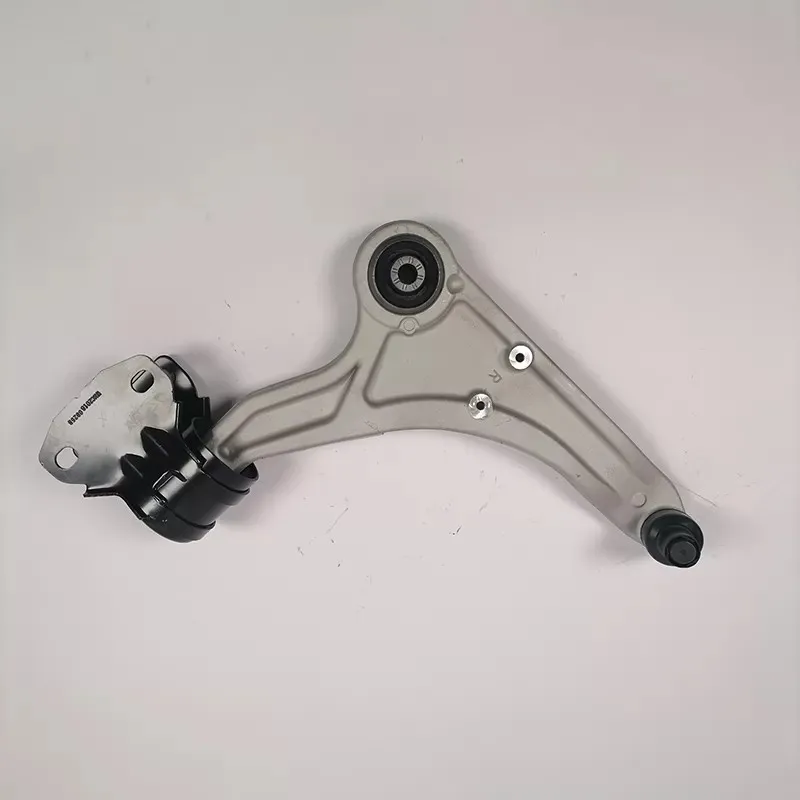
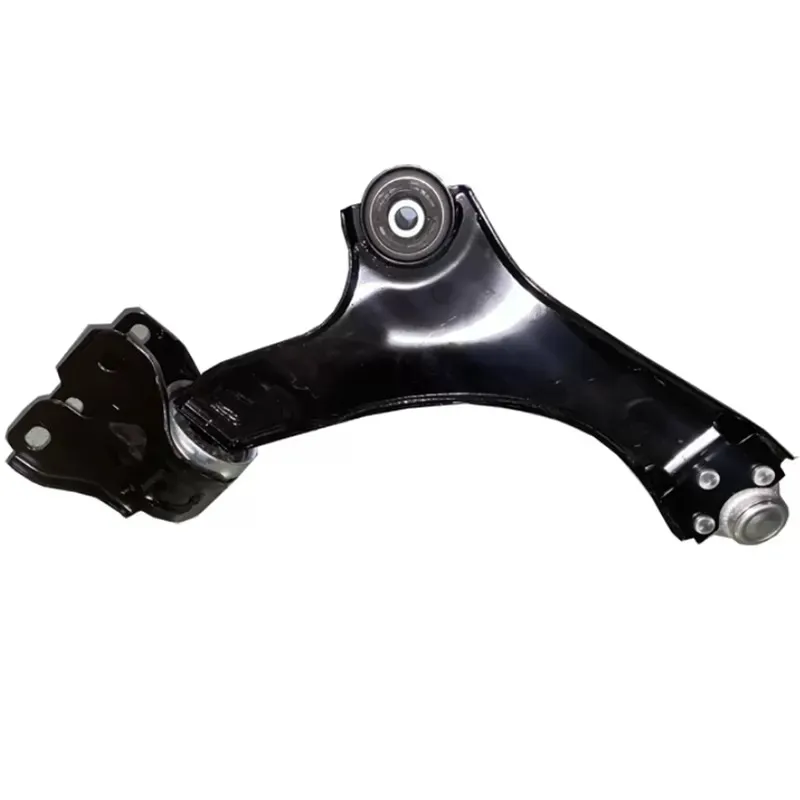
I check control arm compatibility by matching the exact OEM part number with the vehicle VIN, production details, drivetrain, suspension configuration, and control-arm design. I then confirm superseded numbers, aftermarket cross-references, mounting dimensions, side, position, and included components before ordering. This process helps prevent incorrect replacements that look similar but cannot be installed safely.
- Identify the exact OEM control arm part number from the original component, service catalog, or vehicle record.
- Verify the number against the VIN, year, make, model, engine, drivetrain, trim, production date, and suspension configuration.
- Check superseded, revised, and aftermarket cross-reference numbers for restrictions or additional hardware.
- Compare the control arm’s position, mounting points, ball-joint design, bushings, dimensions, and included components.
- Request written supplier confirmation using the VIN, OEM number, production date, and photographs before ordering.
!
What Is a Control Arm OEM Part Number?
A control arm OEM part number is the identification code assigned by the vehicle manufacturer to a specific suspension component. The code may identify more than the general model family; it can also distinguish the front or rear axle, upper or lower position, left or right side, engine configuration, production range, and suspension package. I treat the OEM number as a starting point for fitment verification, not as the only evidence.
OEM numbers and aftermarket numbers serve different purposes. An OEM number identifies the original vehicle application, while an aftermarket number identifies a replacement supplier’s catalog item. Several aftermarket brands may reference the same OEM number, but their assemblies can differ in bushing material, ball-joint inclusion, hardware, coating, or warranty terms. For that reason, I compare the complete replacement specification rather than relying on a matching code alone.
Zegao Machinery manufactures chassis components including Control Arms, ball joints, tie rod ends, stabilizer links, and other suspension parts. The company states that it was established in 1995 in Yuhuan, Zhejiang, and operates a facility covering approximately 5,000 square meters. When reviewing a control arm supplier, I use this type of company information as background, then request specific application data and written fitment confirmation for the required part.
How to Check Control Arm Compatibility Using OEM Part Numbers
Identify the Original Control Arm Number
I begin by locating the number printed, stamped, cast, or labeled on the original control arm. The marking may be on the arm body, a product label, packaging, or an earlier invoice, but surface corrosion and replacement parts can make the original code difficult to read. I record every visible character, including letters, hyphens, spaces, and suffixes, because a single suffix can identify a different side, revision, or production range.
If the number is missing, I use the vehicle identification number and an authoritative parts catalog to identify the applicable component. A VIN lookup for control arm compatibility is more reliable than a general search based only on vehicle name. I also photograph the installed part from several angles so I can compare the replacement’s shape, mounting brackets, bushings, and ball-joint position.
Match the Control Arm to Your Vehicle’s Year, Make, and Model
Control arm fitment by year, make, and model must include more than the model name. I confirm the exact model year, engine, transmission where relevant, drivetrain, trim, body style, production date, and suspension configuration. Two vehicles sold under the same model name may use different control arms because of an engine package, all-wheel-drive system, sport suspension, heavy-duty option, or mid-year design change.
The production date is especially important when the manufacturer changed the suspension during a model year. A catalog may list two control arms for the same year, with one applying before a specific manufacturing date and the other applying afterward. I do not treat a broad year range as proof of compatibility until the VIN range and production detail support the selection.
| Fitment detail |
What I verify |
Why it affects compatibility |
| Vehicle identity |
Year, make, model, body style |
Prevents model-family confusion |
| Powertrain |
Engine, transmission, drivetrain |
Changes axle load and suspension layout |
| Production data |
Build date and VIN range |
Identifies mid-year revisions |
| Suspension |
Standard, sport, heavy-duty, adjustable, or air suspension |
Changes geometry and mounting design |
| Position |
Front or rear; upper or lower |
Determines installation location |
| Side |
Left-hand or right-hand |
Controls bracket and bushing orientation |
Use a VIN Lookup to Confirm Control Arm Compatibility
A VIN lookup allows me to connect the vehicle’s unique identity with the manufacturer’s parts catalog. I provide the complete 17-character VIN and ask the catalog or supplier to confirm the applicable OEM control arm number. The VIN does not replace physical inspection, but it reduces errors caused by overlapping model years and visually similar suspension components.
I check whether the lookup identifies a specific production range, axle code, steering configuration, or suspension option. If the catalog returns multiple numbers, I ask which one applies to the exact VIN rather than choosing the first result. I also keep a record of the lookup result, because it provides useful evidence if the supplier later proposes a different number.
Check Superseded and Conditional Part Numbers
Manufacturers sometimes replace an original control arm number with a revised number. This is called a supersession, and it may mean the newer part is intended to replace the older part directly. However, a superseded number can also require a different nut, bolt, spacer, bracket, bushing sleeve, or ball-joint fastener.
I ask three questions whenever a supplier provides a revised number: Is the new number a direct replacement, does it require additional hardware, and does it apply to the complete VIN range? I also check whether the replacement changes from a bare arm to a complete assembly. A revised number that fits one production range may not apply to every vehicle listed under the same model name.
Compare the Physical and Functional Specifications
After matching the number, I compare the part itself. The control arm must correspond to the correct front or rear position, upper or lower location, left or right side, ball-joint design, bushing arrangement, and mounting points. I compare the bolt-hole spacing, bushing sleeve width, ball-joint taper or stud design, arm curvature, bracket orientation, and clearance around adjacent components.
I also verify what the package contains. A complete control-arm assembly may include pre-installed bushings and a ball joint, while a bare arm may require the original ball joint and separate bushings. A bushing-only component is not an alternative to a complete arm, and an arm with a pre-installed ball joint may have different service procedures and hardware requirements.
How Control Arm Compatibility Checking Works in Practice
A useful example is a front lower control arm for a vehicle with two drivetrain options and a mid-year suspension revision. I would first record the 17-character VIN, build date, engine, drivetrain, and trim. The catalog might return an original OEM number for vehicles built before the revision date and a superseding number for vehicles built afterward.
Next, I would confirm whether the newer number replaces the older number for that specific VIN. I would then compare the supplier’s aftermarket cross-reference with both OEM numbers and request confirmation that the replacement is a complete front lower left or right assembly, not a bare arm. Finally, I would compare the ball-joint position, bushing sleeves, mounting-hole spacing, and included hardware with photographs of the original part.
This example shows why a general statement such as “fits the 2018–2020 model” is incomplete. The correct result depends on the VIN range, production date, drivetrain, side, and assembly contents. If any of those details remain uncertain, I postpone the order until the supplier confirms the application in writing.
Distinguish Similar but Incompatible Control Arms
Visually similar control arms create many ordering errors. A front lower arm and a rear lower arm may have comparable curves but use different mounting points, while left and right arms may appear symmetrical until the bushing brackets are inspected. Upper and lower arms can also share a similar length but differ in ball-joint angle and suspension geometry.
I use the following decision process when a part looks similar but the listing is unclear:
- OEM number matches and VIN matches: Continue with physical and package-content checks.
- OEM number differs but a documented supersession exists: Confirm the replacement conditions and required hardware.
- Aftermarket number matches but OEM reference is incomplete: Request the full cross-reference and application range.
- Shape appears similar but side, position, or ball-joint design differs: Do not order until the supplier confirms compatibility.
- Supplier cannot confirm the VIN or specifications in writing: Treat the part as unverified.
This process is particularly important for used vehicles, imported vehicles, fleet vehicles, and cars that may have received suspension modifications. Previous repairs may have installed an incorrect arm, so matching the current component alone is not always sufficient. I compare the vehicle’s catalog record, the original equipment number, and the suspension geometry before accepting the replacement.
Supplier Confirmation Checklist Before Ordering
I send suppliers a complete information package rather than a short message asking whether a part fits. My request includes the VIN, OEM part number, vehicle year, make, model, engine, drivetrain, trim, production date, suspension type, control-arm position, side, and photographs of the installed component. I also state whether I need a bare arm, an arm with bushings, or a complete assembly with a pre-installed ball joint.
A copyable confirmation message can read as follows:
Please confirm in writing whether your control arm fits VIN [insert VIN]. The original OEM number is [insert number]. The vehicle is a [year, make, model, engine, drivetrain, trim], produced in [month/year]. I need the [front/rear] [upper/lower] [left/right] control arm. Please confirm the aftermarket number, OEM cross-reference, supersession status, included bushings, ball joint, hardware, mounting dimensions, and any VIN-range restrictions. I have attached photographs of the original part.
I retain the supplier’s written reply, product drawing, catalog page, and quotation with the order record. If the response only repeats a generic vehicle range and does not address the VIN or OEM number, I ask for clarification. This creates a clearer record for purchasing, installation, and any later fitment dispute.
Common Verification Mistakes to Avoid
The first mistake is searching by year, make, and model alone. That method can return several control arms for different engines, axles, body styles, or suspension packages. I reduce the risk by adding the VIN and confirming the production date before comparing prices.
The second mistake is assuming that an aftermarket part number is identical to the OEM number. Aftermarket suppliers often use their own catalog codes, so I require a documented OEM cross-reference and application range. I also check whether the number refers to one side or a pair, because some listings use plural wording for a single component.
The third mistake is ignoring assembly contents. A listing may show a control arm with a ball joint in the photograph but sell only the bare arm. Before ordering, I confirm the included bushings, ball joint, nuts, bolts, washers, brackets, and installation requirements.
The fourth mistake is accepting a superseded number without checking conditions. A revised arm may require new hardware or apply only to a particular VIN range. I ask the supplier to state whether the revision is a direct replacement for my vehicle and whether any additional parts must be purchased.
Control Arm Fitment Best Practices for DIY Mechanics and Buyers
Before removing the original arm, I photograph its orientation and label the left or right side. I measure key mounting points when the listing is uncertain, but I do not treat measurements as a substitute for OEM and VIN confirmation. Physical dimensions can be close while the ball-joint taper, bushing angle, or suspension geometry remains incorrect.
After installation, I verify that the fasteners, bushings, ball joint, and brackets are installed according to the vehicle’s service procedure. Some bonded rubber bushings should be tightened at the specified ride height rather than with the suspension hanging. Once the repair is complete, I arrange a wheel alignment when the control arm replacement affects suspension geometry.
Conclusion
How to Check Control Arm Compatibility Using OEM Part Numbers requires a complete verification chain rather than a single catalog search. I start with the original OEM number, then confirm the VIN, year, make, model, engine, drivetrain, trim, production date, and suspension configuration. I next review supersessions, aftermarket cross-references, control-arm position, side, ball-joint design, mounting points, and assembly contents.
Before purchasing, I request written supplier confirmation and compare the proposed part with photographs and physical specifications. This approach helps separate a complete control-arm assembly from a bare arm or bushing-only component and reduces the risk of installing a visually similar but incompatible part. Whether I purchase from Zegao Machinery or another supplier, I use the same documented checklist before placing the order.


 es
 cn