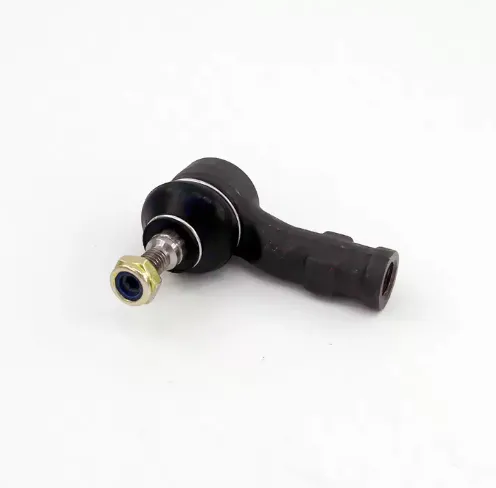
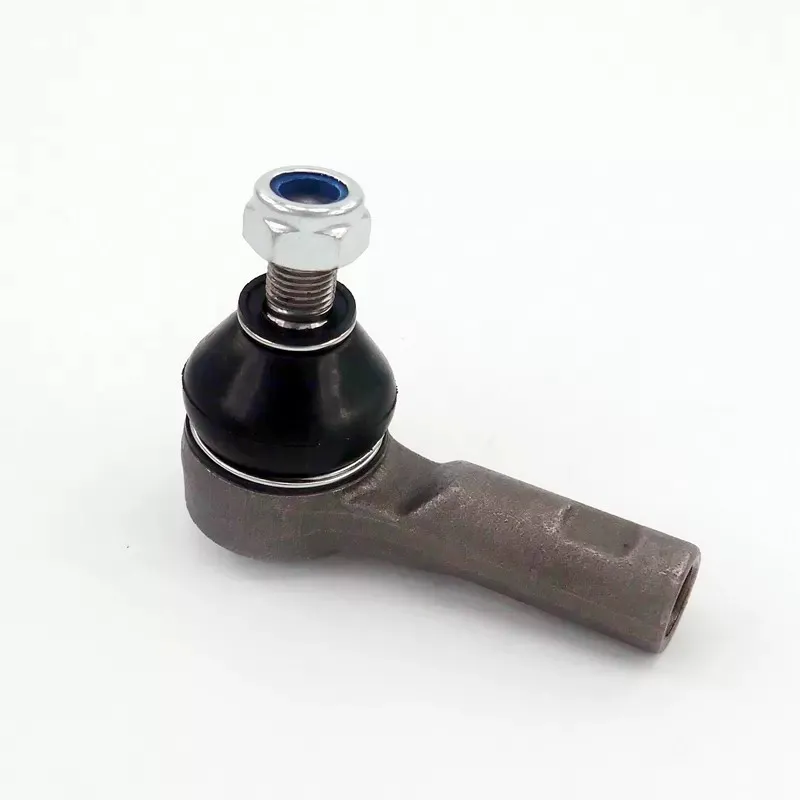
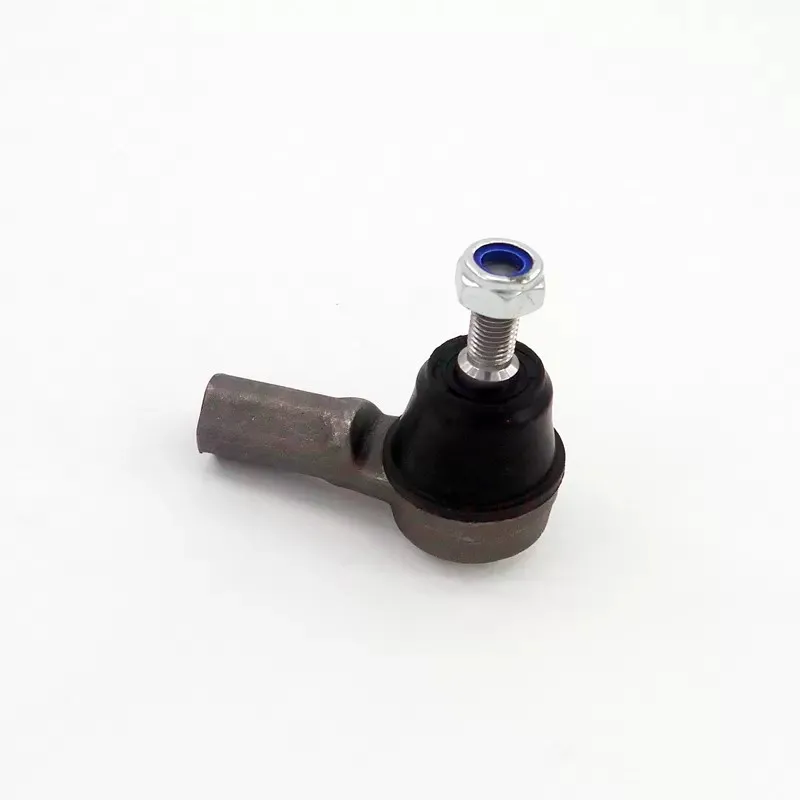
Direct answer: A Tie Rod End operating angle is the angle through which its ball-and-socket joint articulates while the steering and suspension move. Excessive or misaligned articulation increases side loading, friction, and binding, which can accelerate boot damage, looseness, alignment drift, fatigue, and reduced Tie Rod End service life.
When I evaluate steering linkage, I do not judge a tie rod end by static alignment alone. The joint may look acceptable with the vehicle parked, yet move through a much larger angle during steering lock, suspension compression, rebound, or axle movement. This is why the tie rod end operating angle and service life relationship must be assessed across the vehicle’s complete range of motion.
!
Key Takeaways
- Operating angle changes alter ball-joint loading, friction, articulation, and fatigue during steering and suspension movement.
- Static toe alignment cannot reveal dynamic tie rod angles created by lifts, lowering, wheel offset, or suspension travel.
- Excessive articulation may cause premature tie rod end wear, boot damage, binding, looseness, and alignment drift.
- Correct evaluation requires checking ride height, steering lock, suspension travel, joint clearance, and vehicle-specific geometry.
- Zegao Machinery manufactures Tie Rod End and related chassis parts for steering and suspension applications.
How Tie Rod Ends Function Within the Steering and Suspension System
A Tie Rod End connects the steering linkage to the steering knuckle or hub assembly. Its ball-and-socket joint allows the wheel to turn while also accommodating changes in position caused by suspension movement. The inner and outer tie rods work together to transfer steering force, maintain toe geometry, and keep both front wheels responding to steering input.
During normal operation, the joint carries a combination of axial force, radial force, braking-related load, road impact, and vibration. The operating angle determines how directly those forces pass through the joint. When the ball stud and socket remain close to their intended working position, force distribution is more predictable; when the joint approaches its articulation limit, side loading and friction can rise sharply.
The tie rod also affects vehicle behavior beyond steering response. A worn joint can allow unwanted toe change, producing an off-center steering wheel, pulling, unstable response, or uneven tire wear. If a tie rod end is replaced, I recommend a complete wheel alignment because thread position alone cannot confirm that toe is within the vehicle manufacturer’s specification.
What Is the Operating Angle of a Tie Rod End?
The operating angle of a tie rod end is the angle between the joint’s neutral centerline and its actual position while the steering or suspension is moving. It is not a single permanent value because the angle changes with ride height, steering angle, suspension travel, wheel offset, and the relationship between the inner and outer mounting points.
I separate three conditions when checking tie rod geometry. Static angle is measured at a fixed ride height and steering position. Dynamic angle changes as the suspension moves or the steering turns. Misalignment angle describes an unwanted or excessive relationship between the tie rod end and the connected components, often causing the joint to operate near its limit or forcing side load into the ball stud.
This distinction is important because a vehicle can have correct static toe while still producing excessive dynamic articulation. For example, a lift kit may raise the outer steering connection relative to the rack or axle, while a lowered vehicle may reduce available movement in the opposite direction. Wheel offset can also increase steering effort and alter the load path through the steering linkage.
How Operating Angles Affect Tie Rod End Service Life
Operating angle influences service life through four connected mechanisms: load direction, articulation friction, clearance, and repeated fatigue. As the angle increases, a portion of the steering force may act across the ball stud rather than along its preferred load path. That side load can accelerate socket wear, increase movement between mating surfaces, and create looseness that later changes toe alignment.
Excessive angle can also reduce the joint’s available articulation reserve. A tie rod end may still move, but it may approach mechanical contact between the stud, socket, housing, boot, or surrounding components. Binding is especially concerning because the joint may resist smooth movement in one part of the steering or suspension cycle, creating inconsistent steering effort and localized stress.
Repeated movement is often more damaging than a single high-load event. Every steering input, road impact, and suspension cycle can add a small amount of fatigue to the ball stud, socket, housing, and boot. If the joint operates close to its limit for thousands of cycles, premature tie rod end wear may occur even when the vehicle is driven mainly on paved roads.
| Operating condition |
Main mechanical risk |
Inspection focus |
| Low, centered articulation |
Normal joint movement when geometry is correct |
Boot condition, lubrication, fastener torque |
| Increased angle during suspension travel |
Higher side loading and friction |
Full compression and rebound clearance |
| High angle at steering lock |
Binding or contact near maximum articulation |
Left and right steering lock checks |
| Unequal left-right geometry |
Different steering effort and toe response |
Compare both sides at matching positions |
| Angle combined with impact or heavy load |
Accelerated fatigue and looseness |
Joint play, stud movement, housing damage |
How Do You Measure Tie Rod End Operating Angle?
I measure tie rod end operating angle by recording the joint position at several vehicle conditions rather than relying on one parked measurement. The process should be performed with the vehicle safely supported and with suspension components loaded in a way that represents actual operating geometry. A digital angle gauge, inclinometer, camera-based measurement, or carefully marked reference lines can be used, provided the same reference points are used throughout the inspection.
- Record the vehicle configuration. Note ride height, wheel and tire size, wheel offset, steering rack or gearbox position, suspension modifications, and the original tie rod end part number.
- Measure the static position. Record the angle at normal ride height with the steering centered. Photograph the joint and note the reference line between the inner and outer mounting points.
- Check steering travel. Turn the steering gradually toward both locks and watch for stud contact, boot compression, housing interference, or a sudden change in resistance.
- Check suspension travel. Move the suspension through available compression and rebound while monitoring the tie rod end and nearby parts. Pay attention to angles that increase only at one end of travel.
- Compare both sides. Differences between left and right may indicate bent components, incorrect ride height, unequal installation, or altered steering geometry.
- Record the largest observed angle. The maximum dynamic position is more useful than the static number when assessing service life risk.
A simple angle calculation can be made from two measured lines. If a tie rod or reference member rises by a vertical distance Δy over a horizontal distance Δx, the approximate angle is
θ = arctan(Δy ÷ Δx)
. This calculation describes the reference line, not necessarily the joint’s actual articulation limit, so I use it together with a physical clearance and binding check.
What Happens When a Tie Rod End Operates at an Excessive Angle?
When a tie rod end operates at an excessive angle, the most common results are increased side loading, restricted articulation, boot distortion, and faster wear at the ball-and-socket interface. The driver may notice vague steering, a knocking sound, delayed steering response, or a steering wheel that no longer stays centered. These symptoms should not be treated as proof of one specific fault, but they justify a complete steering inspection.
A damaged or displaced boot can allow water, dust, and abrasive particles to reach the joint. Contamination removes the protection that the lubricant and sealing surfaces provide, while repeated angle changes work the contamination deeper into the contact area. The result may be looseness, rough movement, corrosion, or a visible split around the boot’s folds.
Premature tie rod end wear can also create a feedback loop. As clearance develops inside the joint, toe becomes less stable under braking, acceleration, cornering, and road impact. The resulting toe change can produce uneven tire wear, particularly along the inner or outer shoulder, while the driver may compensate with steering corrections that add more movement to the worn joint.
Static Alignment Versus Dynamic Operating Angle
Static alignment describes the wheel position when the vehicle is measured at a defined ride height, usually with the steering centered. It is essential for setting toe, camber, and caster, but it does not describe every position the tie rod end experiences on the road. Dynamic operating angle is affected by steering lock, suspension travel, body movement, ride-height changes, and component clearances.
For that reason, a vehicle can leave an alignment bay with toe within specification and still have a geometry problem during compression or rebound. Lift kits commonly increase the angle between steering components, while lowering springs or altered control-arm positions may reduce travel in one direction. Larger wheels and changes in wheel offset can increase steering loads even when the measured toe remains unchanged.
When I review modified suspension systems, I check the full motion path before selecting replacement parts. The critical question is not simply whether the tie rod end fits the knuckle. I also ask whether the joint has sufficient articulation, whether the stud remains properly seated, whether the boot avoids contact, and whether the steering linkage maintains clearance across the complete range of movement.
Choosing Between Standard and High-Angle Tie Rod Ends
High-angle tie rod ends are designed for applications that require greater articulation than a standard replacement joint can provide. They may use different stud geometry, housing dimensions, spacers, misalignment features, or mounting arrangements. However, a high-angle part is not automatically correct for every modified vehicle because increased articulation capacity does not correct poor rack position, incorrect ride height, or an unsuitable steering linkage layout.
I choose a replacement according to the vehicle’s measured geometry and load requirements. The part must match thread dimensions, taper, stud diameter, mounting width, load direction, boot design, and available articulation. For heavy-duty or off-road applications, I also review impact exposure, water and mud contamination, service access, and whether routine lubrication is expected.
| Selection factor |
Standard Tie Rod End |
High-angle Tie Rod End |
| Original suspension geometry |
Usually appropriate when factory geometry is retained |
May be unnecessary |
| Lifted or heavily modified suspension |
May reach its articulation limit |
Often considered after geometry measurement |
| Severe suspension travel |
Limited by original design range |
Greater articulation may be available |
| Installation requirements |
Usually follows original mounting arrangement |
May require spacers, revised hardware, or geometry checks |
| Service decision |
Best when dimensions and motion match the original |
Best only when measured motion exceeds standard capacity |
Zegao Machinery identifies Tie Rod End products among its chassis-part range, alongside ball joints, control arms, rack ends, stabilizer links, and other suspension components. The company states that its Yuhuan facility covers approximately 5,000 square meters and has operated since 1995, with research and development related to automotive steering systems. When I evaluate a supplier such as Zegao Machinery, I still verify the exact part number, dimensional drawing, material information, testing records, and application coverage for the intended vehicle.
Inspection Points That Help Extend Service Life
I inspect tie rod ends at every service interval that includes steering, suspension, or alignment work. First, I check the boot for cuts, missing clamps, grease leakage, flattening, and contact marks. Next, I inspect the stud, nut, threaded section, and housing for corrosion, deformation, impact marks, or signs that the joint has been forced beyond its intended position.
With the vehicle safely supported, I check for joint play using the manufacturer’s approved method rather than relying only on hand force. I compare left and right movement, listen for clicking or knocking, and observe whether the ball stud moves smoothly through its range. If looseness is present, I investigate the cause before installing a replacement because worn steering knuckles, bent linkage, incorrect hardware, or a geometry error may damage the new part.
I also check tire wear and steering behavior. Feathering, shoulder wear, an off-center wheel, pulling, delayed response, or repeated alignment changes can indicate toe instability. Since bad tie rods can contribute to uneven tire wear, I inspect the tire pattern together with the joint and alignment readings rather than treating the tire as an isolated problem.
How Long Do Tie Rod Ends Usually Last?
There is no universal mileage figure for tie rod end service life because operating conditions vary substantially. A joint used on smooth roads with factory geometry may experience a very different load cycle from one used on rough roads, in deep water, with oversized tires, altered wheel offset, or a lifted suspension. Service life depends on angle, load, contamination, material condition, boot sealing, installation accuracy, and inspection frequency.
I treat looseness, boot damage, binding, and alignment drift as service-life indicators rather than waiting for a fixed mileage interval. A tie rod end that passes a visual check but binds during steering lock or suspension travel still requires attention. If the joint has failed, I replace it with a part that matches the application and complete an alignment after installation.
Conclusion
How Do Operating Angles Affect Tie Rod End Service Life? They affect it by changing the direction and magnitude of joint loading, the amount of articulation available, the risk of binding, and the number of repeated fatigue cycles experienced during driving. Correct static alignment is necessary, but it does not replace a dynamic inspection through steering lock and suspension travel.
To reduce premature tie rod end wear, I record the vehicle’s ride height and wheel configuration, measure both static and dynamic positions, check boot and joint condition, confirm clearance, and compare the selected part with the required load and articulation range. I also inspect toe stability, tire wear, and steering response after installation. For original and modified applications alike, the correct operating angle helps reduce wear, maintain steering performance, and extend Tie Rod End service life.


 es
 cn