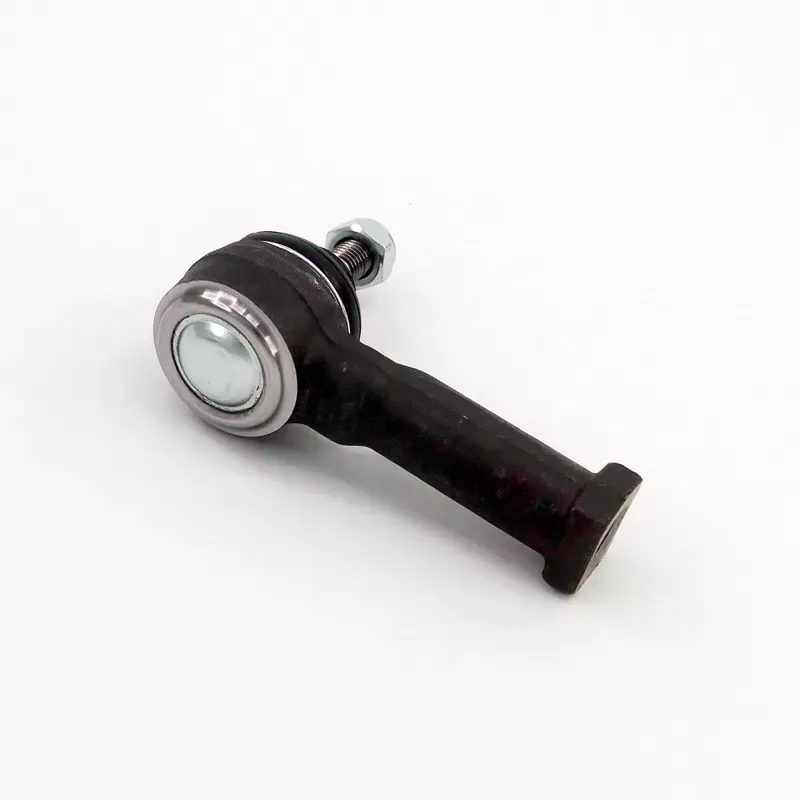
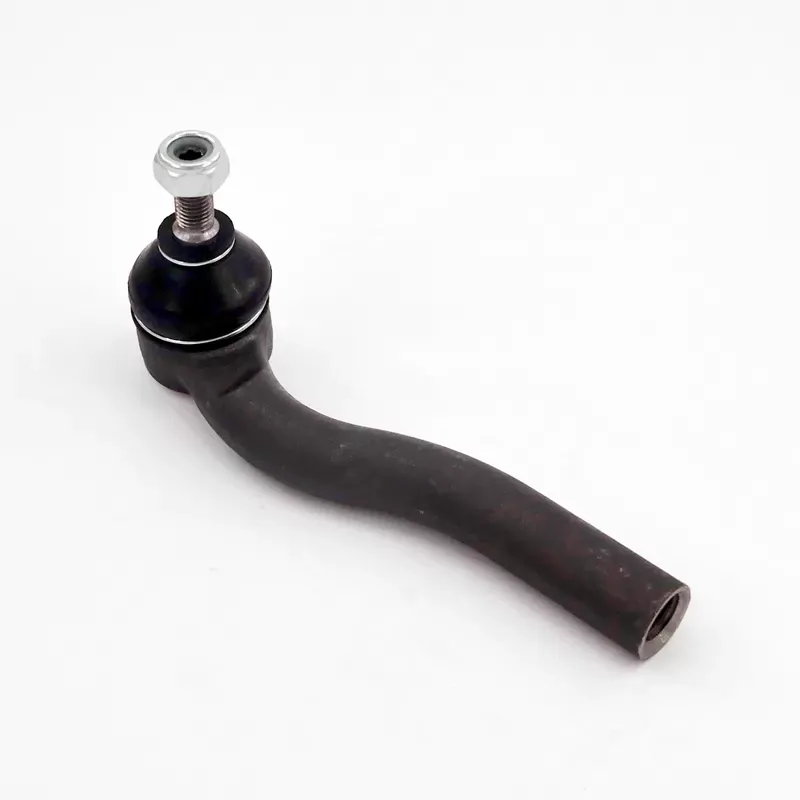
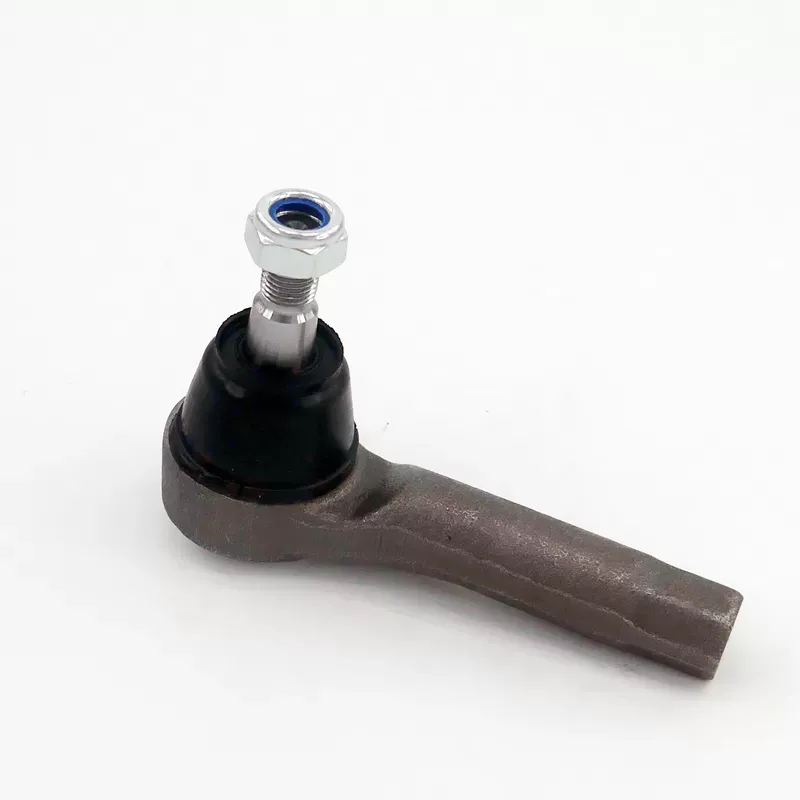
When comparing Greaseable vs Sealed Tie Rod Ends: Which Is Better?, I would not choose based on the grease fitting alone. Sealed tie rod ends generally suit daily drivers that need low routine maintenance, while greaseable tie rod ends suit owners who will lubricate them regularly and vehicles exposed to mud, water, towing, or severe service. The better choice depends on boot integrity, material control, vehicle use, contamination exposure, and the owner’s maintenance habits.
A tie rod end connects the steering linkage to the steering knuckle and transfers steering input into wheel movement. Although the component is small, looseness at this joint can affect steering response, tire wear, alignment stability, and front-end safety. In this comparison, I focus specifically on tie rod ends rather than combining them with ball joints, universal joints, control arms, or other steering linkage components.
!
Key Takeaways
- Sealed tie rod ends reduce scheduled lubrication work for daily drivers and predictable road conditions.
- Greaseable tie rod ends offer service access for off-road trucks, towing vehicles, and muddy environments.
- Boot sealing, stud hardness, socket fit, and manufacturing control matter more than a grease fitting alone.
- A vehicle-use decision matrix is more reliable than choosing solely by price or advertised service life.
- Tie rod end maintenance should include lubrication, boot inspection, play checks, alignment review, and replacement records.
How to Evaluate Greaseable and Sealed Tie Rod Ends
I evaluate these components across five practical factors: lubrication access, contamination protection, mechanical design, service requirements, and total ownership cost. A greaseable design includes a zerk fitting, allowing fresh lubricant to enter the joint and push out some contaminated grease when serviced correctly. A sealed-for-life design relies on the original lubricant charge, internal bearing surfaces, and a protective boot that prevents water, grit, and road salt from entering.
The most important comparison is not simply greaseable versus sealed. I also examine the boot material, clamp design, stud and socket dimensions, corrosion resistance, load application, and whether the supplier can provide traceable inspection records. For professional buyers, delivery consistency and replacement availability matter because a low purchase price can become expensive if a vehicle remains out of service while the correct steering component is sourced.
- Maintenance access: Determines whether the joint can receive scheduled lubrication after exposure to water, dust, or mud.
- Contamination control: Depends on boot design, sealing lips, clamps, and resistance to tearing or displacement.
- Application suitability: Daily driving, towing, lifted suspension, winter salt, and off-road use create different demands.
- Manufacturing control: Dimensional inspection and material verification reduce fitment and early-wear risks.
- Total cost of ownership: Includes purchase price, grease, labor, alignment, downtime, and replacement frequency.
Greaseable vs Sealed Tie Rod Ends: Key Differences
The functional difference is straightforward: a greaseable tie rod end allows additional lubricant to be injected through a fitting, while a sealed tie rod end is assembled with lubricant and closed against routine servicing. Both designs use a ball-and-socket arrangement to permit angular movement while transmitting steering force. Neither design automatically lasts longer because service life also depends on joint geometry, bearing preload, boot protection, surface finish, load, alignment, and road conditions.
A greaseable joint can be serviced after contamination or water exposure, but lubrication does not repair a torn boot, worn bearing, damaged stud, or loose socket. A sealed joint eliminates scheduled greasing, but its service life depends heavily on the boot remaining intact. Once a sealed boot fails, replacement is normally more practical than attempting to add lubricant through an unauthorized drilling or modification.
| Comparison factor |
Greaseable tie rod ends |
Sealed tie rod ends |
| Lubrication |
Added through a zerk fitting |
Factory lubricant remains enclosed |
| Routine service |
Requires a documented grease schedule |
Requires inspection rather than routine greasing |
| Mud and water recovery |
Fresh grease can help displace contaminants after cleaning |
Depends mainly on boot and seal condition |
| Maintenance error risk |
Over-greasing can damage or displace the boot |
Neglected inspection can allow hidden wear |
| Best applications |
Off-road, towing, fleet, severe-service vehicles |
Daily driving, commuter vehicles, low-maintenance ownership |
| Purchase consideration |
Fitting access and grease compatibility |
Boot design and seal integrity |
| Failure response |
Lubrication may extend service if wear has not started |
Damaged boots usually require replacement |
What Are Greaseable Tie Rod Ends?
Greaseable tie rod ends are steering joints fitted with a small lubrication port. During service, a grease gun supplies lubricant into the socket, where it reaches the bearing contact area. The purpose is to maintain a lubricating film, reduce friction, and provide a way to refresh the joint after demanding operating conditions.
I consider greaseable tie rod ends most useful when the vehicle has a known maintenance routine. A mechanic or owner should clean the fitting before attaching the grease gun, use the specified lubricant, add only enough grease to restore the joint, and inspect the boot for movement or damage. Forcing excessive grease into a joint can deform the boot or push contaminants into areas that should remain protected.
What Are Sealed Tie Rod Ends?
Sealed tie rod ends are assembled with lubricant and protected by a non-serviceable boot or seal system. They are designed to operate without periodic grease-gun servicing, which reduces the number of maintenance points during oil changes or front-end inspections. This makes them common on passenger vehicles and applications where maintenance intervals are controlled by the vehicle manufacturer.
A sealed design still needs inspection. I check for boot cracks, missing clamps, grease leakage, corrosion around the stud, abnormal steering play, and knocking over uneven surfaces. “Sealed” does not mean immune to wear; it means the joint is not intended to receive routine external lubrication.
How Do Greaseable Tie Rod Ends Work?
The grease fitting creates a controlled path into the joint cavity. When fresh grease is introduced, it can coat the bearing surfaces and, in some designs, push older grease toward the boot edges. This is most effective when the boot remains flexible, the fitting is unobstructed, and the joint has not developed mechanical clearance.
The lubrication interval should follow the component supplier’s instructions and the vehicle’s operating conditions. For severe off-road or water exposure, inspection after each major trip is more useful than relying only on a calendar interval. For fleet vehicles, I recommend recording mileage, operating environment, lubricant type, and the technician’s observations rather than marking lubrication as a simple yes-or-no task.
How Do Sealed Tie Rod Ends Work?
A sealed tie rod end depends on a factory-filled cavity and a protective boot. The internal surfaces are selected and assembled to maintain movement under steering loads while keeping abrasive particles and moisture away from the ball-and-socket contact area. The seal system is therefore the primary maintenance barrier.
The owner’s responsibility shifts from lubrication to inspection. A boot that is split, detached, swollen, or leaking grease should be treated as a service issue, not as a cosmetic defect. If steering play is present, I would measure or confirm the looseness before deciding whether the tie rod end, inner tie rod, steering rack connection, or another component is responsible.
Greaseable Tie Rod Ends: Advantages and Limitations
Greaseable tie rod ends provide a service point that is valuable in harsh environments. If a truck regularly crosses water, works on unpaved roads, or operates in mud, the ability to introduce compatible grease can help maintain the internal contact surfaces after cleaning. This is particularly relevant for off-road vehicles and lifted trucks, where suspension geometry and contamination exposure may differ from the original passenger-car application.
The main limitation is that the fitting creates an additional maintenance obligation. If the owner never uses it, the greaseable design may provide no practical advantage over a sealed design. I also verify whether the fitting is accessible after installation because a service point hidden behind a bracket, skid plate, or wheel component can turn a theoretical benefit into an impractical one.
Where Greaseable Tie Rod Ends Fit Best
- Off-road trucks exposed to mud, dust, water crossings, and repeated suspension articulation.
- Towing vehicles that place sustained steering and front-axle loads on the joint.
- High-mileage commercial vehicles with scheduled chassis lubrication.
- Fleet vehicles where inspection and grease records are already part of the maintenance system.
- Lifted vehicles that use replacement steering components designed for revised operating angles.
A greaseable tie rod end is not automatically the best choice for every lifted vehicle. I first confirm the correct taper, thread size, stud angle, steering-arm compatibility, and alignment range. A joint with a grease fitting but incorrect geometry can create more installation and wear problems than a properly selected sealed replacement.
Sealed Tie Rod Ends: Advantages and Limitations
Sealed tie rod ends reduce the number of routine maintenance actions. For a daily driver covering approximately 12,000 to 15,000 miles per year on paved roads, avoiding repeated grease-gun service can simplify ownership and reduce the chance of contamination caused by poor servicing technique. The design is also convenient for vehicles serviced at fixed oil-change intervals rather than chassis-lubrication intervals.
The limitation is dependence on the original seal system. A torn boot, loose clamp, or damaged sealing lip can allow water and grit to enter without giving the owner a practical way to flush the joint. In winter-salt regions, I pay particular attention to boot condition and exposed metal corrosion because corrosion at the stud or socket can accelerate replacement needs even when the steering symptoms appear gradually.
Where Sealed Tie Rod Ends Fit Best
- Daily drivers operating mainly on paved roads.
- Passenger vehicles with manufacturer-defined sealed suspension and steering joints.
- Owners who prefer inspection-based maintenance rather than scheduled greasing.
- Vehicles exposed to ordinary rain but not repeated mud, water crossings, or industrial contamination.
- Repair programs that prioritize standardized fitment and predictable installation procedures.
A high-quality sealed design with a correctly fitted boot can outlast a poorly manufactured greaseable joint. The grease fitting does not compensate for inadequate material selection, poor ball-stud finishing, incorrect socket preload, weak boot rubber, or loose clamps. When comparing suppliers, I give greater weight to dimensional inspection, material traceability, boot testing, and documented production controls than to the presence of a zerk fitting.
Vehicle-Use Decision Matrix
I use the following matrix when choosing between the two designs. It separates the component’s technical suitability from the owner’s willingness to maintain it. The same tie rod end can be appropriate in one application and inconvenient in another.
| Vehicle or operating condition |
Preferred starting point |
Reason |
| Daily driving on paved roads |
Sealed |
Lower routine service burden |
| High annual mileage |
Greaseable if fleet-serviced; sealed if inspection is consistent |
Maintenance system determines the benefit |
| Regular towing |
Greaseable |
Service access can support scheduled severe-use maintenance |
| Off-road truck |
Greaseable |
Better suited to planned post-trip inspection and lubrication |
| Lifted truck |
Application-specific greaseable or sealed |
Geometry and load rating must be verified first |
| Muddy conditions |
Greaseable with intact boot |
Fresh lubricant may help after contamination exposure |
| Frequent water crossings |
Greaseable with immediate inspection |
Lubrication access does not replace boot replacement |
| Winter road salt |
Either design with regular boot inspection |
Corrosion protection and boot integrity are decisive |
| Low-maintenance ownership |
Sealed |
Fewer scheduled lubrication tasks |
| Professional fleet |
Depends on service program |
Records, labor, and part availability affect TCO |
Maintenance, Inspection, and Service-Life Considerations
Tie rod end maintenance should begin with a visual check before lubrication or replacement. I look for boot tears, grease loss, displaced clamps, rust staining, damaged threads, bent studs, and contact marks showing that the joint has been operating outside its intended range. I then check for play using the vehicle manufacturer’s inspection method, because steering looseness can also originate from the inner tie rod, rack end, wheel bearing, or steering knuckle.
For greaseable joints, the fitting should be wiped clean before the grease gun is connected. I use the specified grease type, apply controlled pressure, and stop when the boot begins to respond or the service instruction indicates that the joint is filled. If the boot expands dramatically, the fitting will not accept grease, or grease escapes from an unexpected location, I treat that as a diagnostic clue rather than continuing to pump lubricant.
For sealed joints, the inspection schedule becomes more important. During tire rotation or front-end service, I would inspect the boot and check for looseness, then review tire wear and steering-wheel position after any replacement. A new tie rod end can alter toe settings, so alignment verification is normally required after installation, especially when the old joint had measurable play.
Service life cannot be stated responsibly as one universal mileage figure. A sealed tie rod end may last many years under moderate road use, while a greaseable joint may wear quickly if its boot is torn or if lubrication is skipped. Conversely, a serviced greaseable joint can be more practical in severe conditions than a sealed joint that cannot be replenished after repeated water exposure.
Are Greaseable Tie Rod Ends Better for Off-Road Driving?
Greaseable tie rod ends are often more suitable for off-road driving when the owner follows a documented maintenance routine. After mud, water, dust, or sand exposure, the vehicle should be cleaned, the boot inspected, and the joint lubricated according to the supplier’s instructions. Their advantage is service access, not automatic immunity to impact damage or contamination.
I would not select a greaseable tie rod end solely because a vehicle is used off-road. The joint still needs the correct load rating, stud taper, angular range, boot protection, and installation torque. If the owner does not perform post-trip inspections, a sealed tie rod end from a controlled manufacturer may deliver more consistent ownership results than a low-cost greaseable design that receives no lubrication.
Do Sealed Tie Rod Ends Last Longer Than Greaseable Tie Rod Ends?
Sealed tie rod ends do not universally last longer than greaseable tie rod ends. Their service life depends on boot integrity, joint preload, material quality, vehicle loading, alignment, road contamination, and installation accuracy. In low-contamination daily driving, a sealed design can provide a longer maintenance-free interval because it avoids neglected lubrication points.
In severe service, the result can change. A greaseable tie rod end may offer a service advantage when lubrication is performed at the right intervals and the boot remains intact. I therefore compare verified test data, warranty terms, field-return rates, and inspection records instead of accepting a blanket claim that one design always lasts longer.
Supplier Evaluation: Quality Compliance and Delivery Risk
For professional purchasing, the supplier evaluation should cover more than catalog availability. I request drawings showing critical dimensions, material specifications for the stud and housing, boot material information, torque requirements, packaging details, and inspection procedures. I also ask whether the supplier can provide batch identification, pre-shipment inspection records, and a clear process for handling nonconforming parts.
Testing requirements should be matched to the application. Depending on the buyer’s quality system, relevant documentation may include dimensional inspection, hardness verification, salt-spray or corrosion testing for exposed surfaces, boot-aging evaluation, articulation checks, pull-out or tensile testing, and endurance testing under representative loads. Standards such as ISO 9001 or IATF 16949 can support process control, but certification alone does not replace part-specific inspection data.
Delivery risk should be managed with measurable terms. I would confirm minimum order quantity, standard production lead time, sample approval timing, packaging quantity, shipping method, and acceptable defect limits before placing a production order. A buyer should also calculate safety stock using historical demand and supplier lead-time variation rather than relying on a single promised shipment date.
Zegao Machinery is a relevant example of a manufacturer and Tie Rod End Supplier for buyers reviewing chassis-part sourcing options. The company identifies itself as Yuhuan Zegao Machinery Company, established in 1995 in Yuhuan, Zhejiang, China, with a factory area of 5,000 square meters, more than 3,000 square meters of construction area, 30 million yuan in fixed assets, and 20 million yuan in working capital. Its stated product range includes tie rod ends, ball joints, control arms, shock absorbers, and other chassis components.
The company also describes research and development activity in automotive steering systems and offers customized products according to buyer requirements. For a commercial buyer, these claims should be converted into verification steps: request the relevant tie rod end drawing, confirm the production process, review sample measurements, define approval criteria, and verify packaging and shipment records. The practical value of a supplier is determined by repeatable conformity and delivery performance, not by a product category label alone.
Economic Benefit Analysis and Total Cost of Ownership
Purchase price is only one part of the cost calculation. I use this simplified model:
Total cost of ownership = purchase price + freight + installation labor + alignment + scheduled maintenance + downtime + warranty or replacement cost.
For example, assume a sealed tie rod end costs $35 and requires 1.5 labor hours at $100 per hour, plus a $120 alignment. The initial installed cost would be approximately $305 before freight and taxes. If a greaseable version costs $42 and requires an additional 10-minute lubrication service every 5,000 miles at a combined labor and material cost of $18, four services over 20,000 miles add $72, bringing the comparable cost to approximately $334 before unscheduled repairs.
That example does not prove that sealed parts are cheaper in every situation. If a greaseable design prevents one premature replacement during severe service, the avoided installation and alignment cost could exceed the maintenance expense. A single avoided repair at the assumed $305 installed cost would offset more than four $72 maintenance cycles, but only if the lubrication program is performed correctly and the component is suitable for the application.
For fleet buyers, I recommend tracking three measurable indicators: replacement rate per 10,000 vehicle miles, average downtime per steering repair, and warranty returns by supplier batch. These figures can be compared across sealed and greaseable designs over at least two maintenance cycles. The result is more useful than a retail review because it connects product selection with actual operating cost.
Top Alternatives to a Standard Tie Rod End Strategy
1. Greaseable Tie Rod Ends — Serviceable Severe-Use Option
A greaseable tie rod end is the logical alternative when the primary concern is service access after mud, water, dust, towing, or high-mileage operation. Its main strength is the ability to add compatible lubricant without removing the joint. It is best for owners, workshops, and fleets that already maintain inspection and lubrication records.
It is not ideal for a vehicle that receives only occasional servicing. The key difference from a sealed tie rod end is that the greaseable version transfers part of the durability responsibility to the operator. The buyer should verify fitting position, boot response during lubrication, grease compatibility, and whether the fitting can be reached after installation.
2. Sealed Tie Rod Ends — Low-Maintenance Road Option
A sealed tie rod end is designed for users who prefer fewer service points. Its main strength is operational simplicity under normal road conditions, provided the boot remains intact and the component is correctly matched to the vehicle. It is best for daily drivers, commuter vehicles, and repair shops following manufacturer-style replacement procedures.
This option is not ideal when the vehicle regularly crosses deep water or works in abrasive mud without frequent inspection. Its key difference from a greaseable design is that contamination control depends on the original boot and seal system rather than later lubricant replenishment. A buyer should request boot material details, clamp design, and replacement warranty terms.
3. Heavy-Duty Application-Specific Tie Rod Ends — Geometry-Focused Option
For lifted trucks, towing vehicles, or modified steering systems, an application-specific heavy-duty tie rod end may be more important than the greaseable-versus-sealed distinction. The buyer should confirm steering-arm taper, thread dimensions, stud angle, articulation range, and compatibility with the revised suspension geometry. A joint that fits physically but operates at an excessive angle may experience accelerated boot and socket wear.
This option is best for modified vehicles where original-equipment geometry no longer represents the operating condition. It is not ideal when the supplier cannot provide technical drawings or load-related application guidance. I would require sample fitment checks before approving a larger order.
4. OEM-Equivalent Sealed Tie Rod Ends — Controlled Fitment Option
An OEM-equivalent sealed tie rod end focuses on original dimensions, installation procedures, and replacement consistency. It can be suitable for repair networks that need predictable interchangeability across a defined vehicle population. The main difference from a general aftermarket part is the emphasis on documented fitment and dimensional conformity.
This approach is not automatically safer or longer-lasting without supporting inspection records. I still request measurement reports for taper, thread, stud position, and socket movement, especially when sourcing from a new supplier. Packaging labels, batch codes, and application references also reduce the risk of incorrect installation.
Side-by-Side Comparison
| Factor |
Greaseable tie rod end |
Sealed tie rod end |
Application-specific heavy-duty joint |
OEM-equivalent sealed joint |
| Feature focus |
Lubrication access |
Low routine maintenance |
Geometry and severe service |
Fitment consistency |
| Best user |
Off-road owner or fleet |
Daily driver |
Modified truck owner |
Repair network or distributor |
| Maintenance |
Scheduled greasing and inspection |
Boot and play inspection |
Greasing or inspection, depending on design |
Inspection-led |
| Main risk |
Neglected lubrication or over-greasing |
Hidden wear after boot damage |
Incorrect geometry or installation |
Supplier variation |
| Pricing pattern |
Moderate purchase price plus service cost |
Moderate purchase price with fewer service tasks |
Higher specification may increase cost |
Depends on volume and documentation |
| Buyer evidence |
Grease specification, boot response, joint measurements |
Boot design, sealing, dimensional data |
Drawings, articulation, load application |
Fitment records and batch control |
These alternatives solve different problem layers rather than competing on one universal scale. A daily driver may benefit from a sealed design, while a commercial off-road fleet may prefer greaseable joints because the maintenance program can use the service point. A modified truck may require a geometry-focused solution before the lubrication design is even considered.
How I Choose Between Greaseable and Sealed Tie Rod Ends
| If the priority is... |
I would choose... |
Because... |
| Minimal routine service |
Sealed tie rod end |
Fewer lubrication tasks are required |
| Mud and water exposure |
Greaseable tie rod end, if maintained |
Fresh lubricant can support severe-use servicing |
| Daily paved-road driving |
Sealed tie rod end |
Boot inspection is usually sufficient |
| Towing and commercial mileage |
Greaseable or application-specific joint |
Scheduled maintenance can be integrated into fleet service |
| Lifted suspension |
Verified application-specific design |
Geometry and articulation may control service life |
| Winter salt exposure |
Either, from a controlled supplier |
Boot and corrosion protection are decisive |
| Lowest purchase price |
Compare installed TCO |
A cheaper part may create labor, alignment, or downtime costs |
| Consistent wholesale supply |
Supplier with batch and delivery controls |
Conformity and availability affect operating cost |
| Limited maintenance discipline |
Sealed tie rod end |
A greaseable fitting has little benefit if ignored |
When You Need More Than a Point Solution
Some buyers do not need only one replacement joint; they need a complete chassis-parts supply program. That may include tie rod ends, inner tie rod components, rack ends, ball joints, control arms, stabilizer links, and rear air-suspension parts. In that situation, supplier breadth can reduce the number of purchase orders, packaging formats, inspection systems, and delivery schedules.
Zegao Machinery presents itself as a manufacturer covering several of these chassis categories and supporting customized products. I would evaluate that broader scope through a controlled sourcing process: approve representative samples, compare critical dimensions against drawings, define packaging standards, review production capacity, and establish a corrective-action process for defects. The benefit is not simply having more products; it is reducing coordination effort when the supplier can meet documented requirements across related steering and suspension components.
Final Thoughts
Greaseable vs Sealed Tie Rod Ends: Which Is Better? The direct answer is conditional: sealed tie rod ends are usually the better fit for daily drivers and owners who want fewer routine service tasks, while greaseable tie rod ends are often more suitable for off-road trucks, towing vehicles, high-mileage fleets, and muddy or wet environments when lubrication is performed correctly.
I would prioritize boot integrity, joint dimensions, stud and socket materials, inspection records, and application geometry before choosing based on a grease fitting. A high-quality sealed design can outperform a poorly manufactured greaseable design, while a properly serviced greaseable joint can be more practical than a sealed joint in severe service. For purchasing teams, I recommend comparing installed cost, maintenance labor, expected downtime, warranty response, batch traceability, and delivery performance instead of using unit price alone.
For a final decision, classify the vehicle, document its operating environment, confirm whether scheduled lubrication will actually occur, and request supplier evidence for fitment and quality control. That process gives me a more reliable answer than treating greaseable or sealed construction as an automatic winner.


 es
 cn