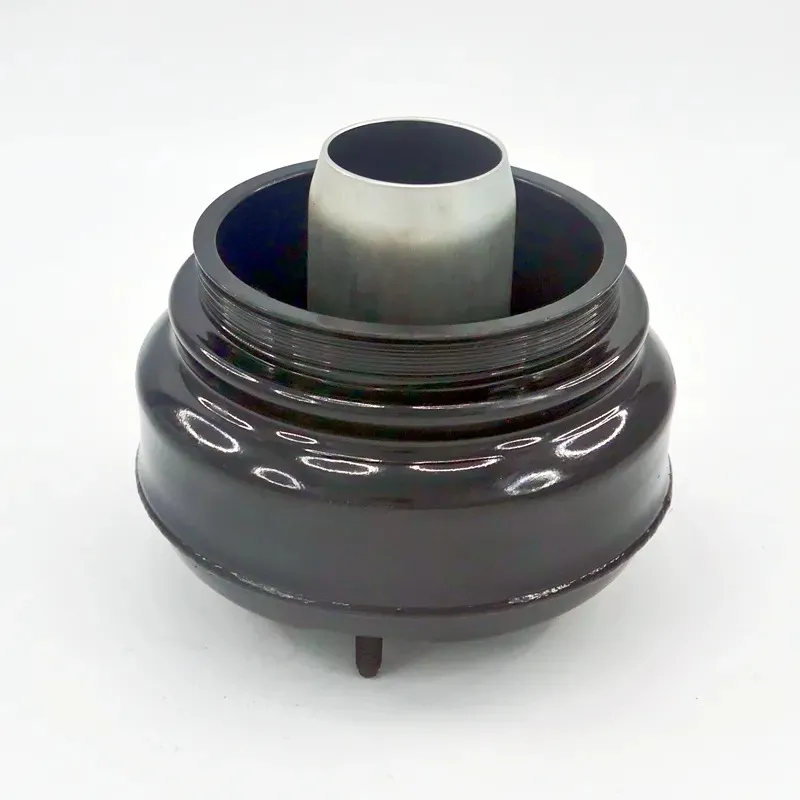
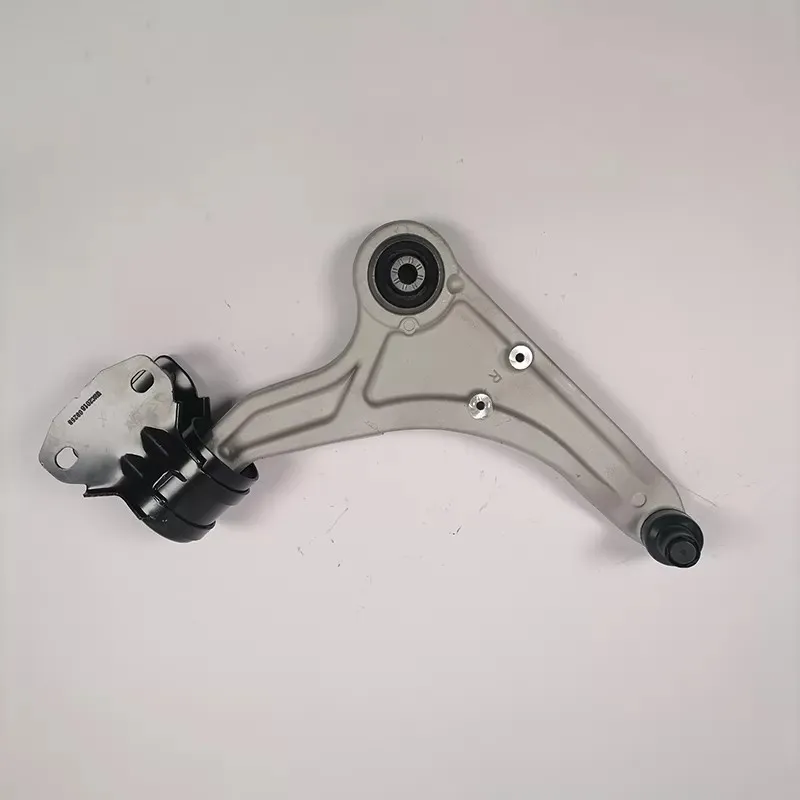
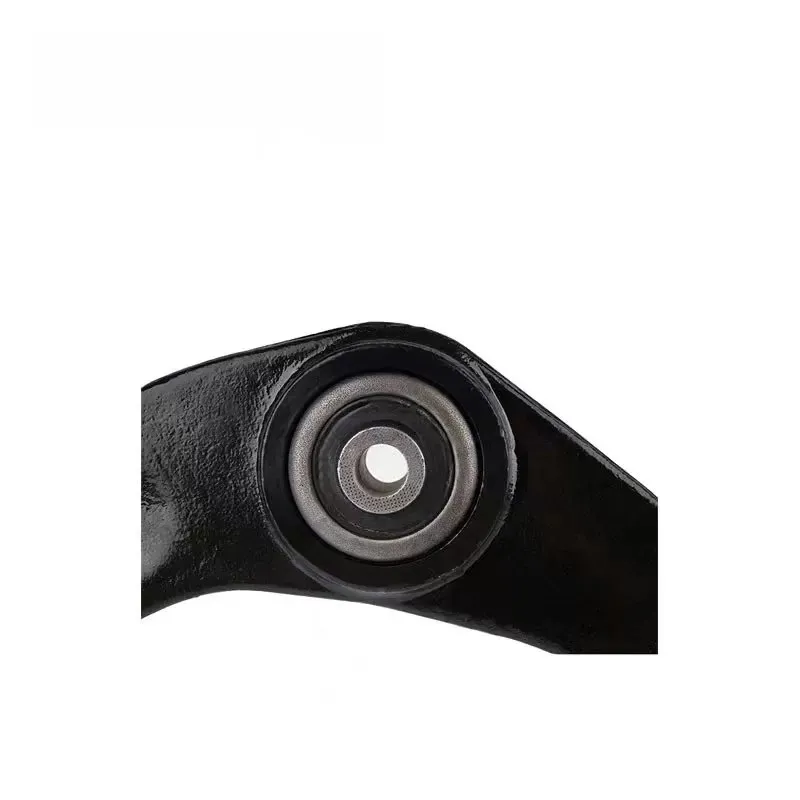
The control arm and ball joint are different suspension components that work together to connect the wheel assembly to the vehicle body. A control arm is a rigid link that manages wheel movement, while a ball joint is a pivot that allows the steering knuckle to turn as the suspension moves. Some vehicles use a separate ball joint, while others use a complete control-arm-and-ball-joint assembly.
!
When I compare these parts, I focus on their physical location, movement, failure symptoms, replacement method, and effect on wheel alignment. This distinction matters because a damaged bushing, bent arm, worn ball joint, tie-rod end, or wheel bearing can produce similar front-end noise. Correct identification prevents unnecessary parts replacement and helps determine whether the vehicle can be driven safely to a repair facility.
Control Arm vs. Ball Joint: Key Differences Explained
A control arm is usually a stamped-steel, forged-steel, or aluminum suspension link mounted between the vehicle frame or subframe and the steering knuckle. Most Control Arms contain one or more control arm bushings at the body-side mounting points. The arm controls the wheel's vertical path while allowing suspension movement through the bushings and ball joint.
A ball joint is a spherical pivot installed between the control arm and steering knuckle, although its exact location depends on the suspension design. It allows the knuckle to move up and down with the suspension while also turning left and right with the steering system. In simple terms, the control arm provides structure and location, while the ball joint provides controlled articulation.
| Comparison point |
Control arm |
Ball joint |
| Main role |
Positions the wheel assembly and manages suspension movement |
Provides a pivot between the control arm and steering knuckle |
| Typical construction |
Steel or aluminum arm with rubber or hydraulic bushings |
Ball-and-socket joint with a stud, housing, boot, and lubricant |
| Common wear areas |
Bushings, mounting holes, corrosion, bent metal |
Ball stud, socket, boot, lubricant, and retaining components |
| Typical symptoms |
Clunks, pulling, uneven tire wear, unstable braking |
Looseness, steering wander, clunking, uneven tire wear |
| Replacement method |
Replace bushings, the arm, or the complete assembly |
Replace the joint alone or the arm-and-joint assembly |
| Alignment effect |
Often changes wheel geometry |
May change geometry if joint position or mounting is affected |
How a Control Arm Works
The control arm keeps the wheel hub and steering knuckle within a designed range of motion. Its bushings absorb small impacts and isolate vibration from the passenger compartment, while the arm resists braking, cornering, and road-load forces. On a double-wishbone suspension, the upper and lower arms help control camber and wheel travel; on a MacPherson strut layout, the lower arm commonly works with the strut and steering knuckle.
A control arm can fail in several ways. The metal may bend after a collision or severe pothole impact, the mounting area may corrode, or the bushing may crack, separate, deform, or allow excessive movement. Because the arm affects wheel position, a damaged arm can create alignment problems even when the ball joint itself remains tight.
How a Ball Joint Works
The ball joint uses a spherical stud inside a matching socket so the steering knuckle can pivot through multiple directions. The protective boot keeps water and abrasive debris away from the joint while retaining lubricant inside. If the boot tears, contamination can accelerate wear even before the driver notices steering changes.
A worn ball joint may develop radial or axial play. The exact inspection method depends on the suspension layout, because some joints carry vehicle weight while others mainly guide movement. For that reason, I follow the vehicle manufacturer's lifting and measurement instructions instead of relying on one universal test.
How Control Arms and Ball Joints Work Together
The control arm and ball joint form part of a larger suspension system that may also include the steering knuckle, wheel hub, wheel bearing, tie-rod end, stabilizer link, strut, spring, and shock absorber. The control arm attaches to the body, and the ball joint connects the outer end of the arm to the steering knuckle. Steering input moves the knuckle through the ball joint while suspension travel moves the wheel vertically.
The two components are often sold together because many vehicles use a ball joint pressed or riveted into the control arm. Replacing the complete assembly can reduce labor when the bushings and ball joint show similar wear, but it is not automatically the correct choice. I compare the part design, labor time, warranty terms, and condition of the existing components before selecting a repair method.
Zegao Machinery, also identified as Yuhuan Zegao Machinery Company, lists Control Arms, ball joints, tie-rod ends, stabilizer links, rack ends, and other chassis parts among its product categories. The company states that it was established in 1995 and operates from a 5,000-square-meter factory with more than 3,000 square meters of construction area. Its published company information also lists 30 million yuan in fixed assets, 20 million yuan in working capital, and 60 million yuan in annual total output value.
Common Signs of a Bad Control Arm
Control arm symptoms usually relate to bushing movement, arm deformation, or a damaged mounting point. I look for symptoms that change with braking, acceleration, cornering, or road impact rather than assuming every clunk comes from the ball joint. A complete inspection should compare both sides of the axle and check the tire, wheel, steering, and suspension components together.
Common signs include:
- Clunking or knocking over bumps, especially during low-speed turns or braking.
- Vehicle pulling or steering that does not remain centered.
- Uneven or accelerated tire wear caused by changed wheel geometry.
- Excessive wheel movement when the brake is applied and released.
- Visible cracks, separation, fluid leakage, or distortion in a control arm bushing.
- A bent arm, damaged mounting point, or impact mark after a pothole or collision.
A failed bushing may allow the control arm to shift backward or forward under braking. This can create a delayed steering response, a wandering sensation, or a vehicle that changes direction when the driver accelerates. If the arm is bent, replacing only the bushing will not restore the intended suspension geometry.
Common Signs of a Bad Ball Joint
Bad ball joint symptoms commonly include looseness, steering wander, and noise that changes as the wheel moves through suspension travel. Some joints make a sharp clunk, while others produce no obvious noise even when measurable play is present. The absence of noise does not prove that the joint is safe.
Typical signs include:
- Clunking or popping when driving over uneven pavement.
- Steering that feels loose, vague, or difficult to keep centered.
- Uneven tire wear near the inner or outer tread edge.
- A wheel that appears to lean inward or outward compared with the opposite side.
- Visible grease leakage or a split protective boot.
- Measurable vertical or lateral play during an approved inspection.
A severely worn load-carrying ball joint can separate, allowing the steering knuckle and wheel to move out of position. That failure can cause loss of steering control, suspension collapse, or contact between the tire and surrounding components. If I see substantial play, a separated boot with visible contamination, or a joint approaching the manufacturer's limit, I recommend stopping use until the vehicle is inspected and repaired.
Practical Diagnostic Workflow
I separate ball-joint wear from control-arm bushing wear by inspecting the entire corner in a fixed order. First, I confirm the symptom with a road test only when the vehicle can be operated safely. I then inspect the tire, wheel, brake hardware, steering linkage, wheel bearing, control arm, bushings, and ball joint before deciding which part is responsible.
A practical workflow is:
- Check the tire and wheel. Look for uneven tread wear, a damaged wheel, low pressure, or a separated tire belt.
- Inspect the control arm and bushings. Search for torn rubber, fluid leakage from hydraulic bushings, separated sleeves, corrosion, or arm deformation.
- Inspect the ball-joint boot. A torn boot, missing retaining ring, grease loss, or contamination indicates a strong reason for closer testing.
- Check for movement using the vehicle-specific method. Use the specified lifting point and support method because suspension loading changes the result.
- Compare related components. Check the tie-rod end for steering play, the wheel bearing for hub movement, and the stabilizer link for independent clunks.
- Measure alignment after repair. Record camber, caster, and toe where applicable, then adjust the vehicle according to its service specifications.
A tie-rod problem usually produces steering linkage play at the outer or inner connection, while a wheel-bearing problem often produces hub looseness or a speed-related humming sound. A control-arm bushing tends to show movement between the arm and the mounting sleeve. A ball joint shows movement at the spherical pivot, although the exact direction depends on whether it is a loaded or unloaded joint.
Can You Replace Just the Ball Joint?
Yes, some vehicles allow the ball joint to be replaced separately, but the decision depends on how the joint is attached and the condition of the control arm. A press-fit or bolt-in joint may be serviced independently when the arm is straight, corrosion-free, and its bushings remain within acceptable condition. A riveted joint may require removal of the rivets and installation of replacement hardware.
Replacing the complete control-arm assembly is often justified when the arm includes the ball joint, the bushings are also worn, labor access is difficult, or the vehicle has high mileage and repeated suspension work would cost more. I do not replace the entire assembly solely because it is convenient if the replacement part does not match the vehicle's suspension design. The assembly must have the correct mounting points, joint position, hardware, and load rating.
Replacement Cost and Repair Options
The control arm replacement cost vs. ball joint replacement cost depends on vehicle design, labor rates, part construction, rust, and whether an alignment is required afterward. A separately replaceable ball joint may reduce parts cost, but pressing the joint out and in can increase labor. A complete control arm with bushings and ball joint may cost more per part while reducing disassembly time.
| Repair option |
When it makes sense |
Cost factors |
| Ball joint only |
The control arm and bushings remain serviceable |
Pressing or bolting time, hardware, alignment check |
| Control arm bushing only |
The ball joint and arm are not damaged |
Press equipment, sleeve condition, labor access |
| Complete control arm assembly |
Bushings, joint, or arm show combined wear |
Assembly price, labor, alignment, fasteners |
| Pair replacement |
Both sides show similar age or wear |
Two parts, additional labor, alignment inspection |
I treat online prices as estimates rather than fixed figures because the same vehicle may use different suspension layouts across model years and trim levels. Before approving work, I ask for the part number, labor scope, alignment charge, replacement hardware, and warranty terms. If the vehicle has collision damage or severe corrosion, additional inspection may be required before the final price is known.
Vehicle-Specific Parts-Selection Checklist
When I select a control arm or ball joint, I verify more than the vehicle make and model. I confirm the model year, engine, drivetrain, suspension layout, axle position, and whether the vehicle uses an upper or lower joint. Small dimensional differences can prevent installation or alter wheel geometry.
Use this checklist before ordering:
- Confirm the vehicle identification number, or VIN.
- Match the original OEM or manufacturer reference number.
- Identify the left or right side and front or rear axle position.
- Confirm upper versus lower control-arm location.
- Check whether the ball joint is included with the arm.
- Check whether bushings, mounting bolts, nuts, washers, and retaining clips are included.
- Verify the suspension layout, such as MacPherson strut or double wishbone.
- Compare the arm shape, bushing orientation, joint stud size, and mounting-hole pattern.
- Review whether the part is intended for original-equipment or aftermarket replacement.
Zegao Machinery presents separate product categories for control arms and ball joints and lists products with OEM references and internal ZG numbers. For buyers comparing suppliers, I would request dimensional drawings, material information, inspection records, packaging details, minimum order quantity, and warranty conditions before placing a bulk order. These documents are more useful than relying on a generic claim about fitment.
Do You Need an Alignment After Replacement?
I recommend an alignment check after replacing a control arm, ball joint, or related steering component, even when the vehicle appears to drive normally. Removing and reinstalling suspension parts can alter toe, camber, caster, or the steering-wheel center, depending on the design. An alignment report provides measurable confirmation instead of relying only on a short road test.
An alignment may be especially important when the old part was bent, the vehicle had uneven tire wear, or the repair involved adjustable mounting points. The technician should also confirm that fasteners were tightened at the required suspension position where specified. Incorrect bushing preload can shorten bushing life and change ride behavior.
Final Thoughts
Control Arm vs. Ball Joint: What's the Difference? The control arm is the structural link that positions the wheel assembly, while the ball joint is the pivot that allows the steering knuckle to turn and move with the suspension. They work together, but they do not perform the same job, and their symptoms can overlap with worn tie rods, wheel bearings, stabilizer links, or tires.
When I assess a suspected failure, I inspect the bushings, arm shape, ball-joint boot, joint play, steering linkage, wheel bearing, and alignment condition as one system. Replace only the ball joint when the control arm and bushings remain serviceable, but consider a complete assembly when the arm, bushings, and joint show combined wear or when the vehicle design integrates them. If steering becomes loose, the wheel leans visibly, or a load-carrying joint has substantial play, I would stop driving and arrange an inspection before further use.


 es
 cn